
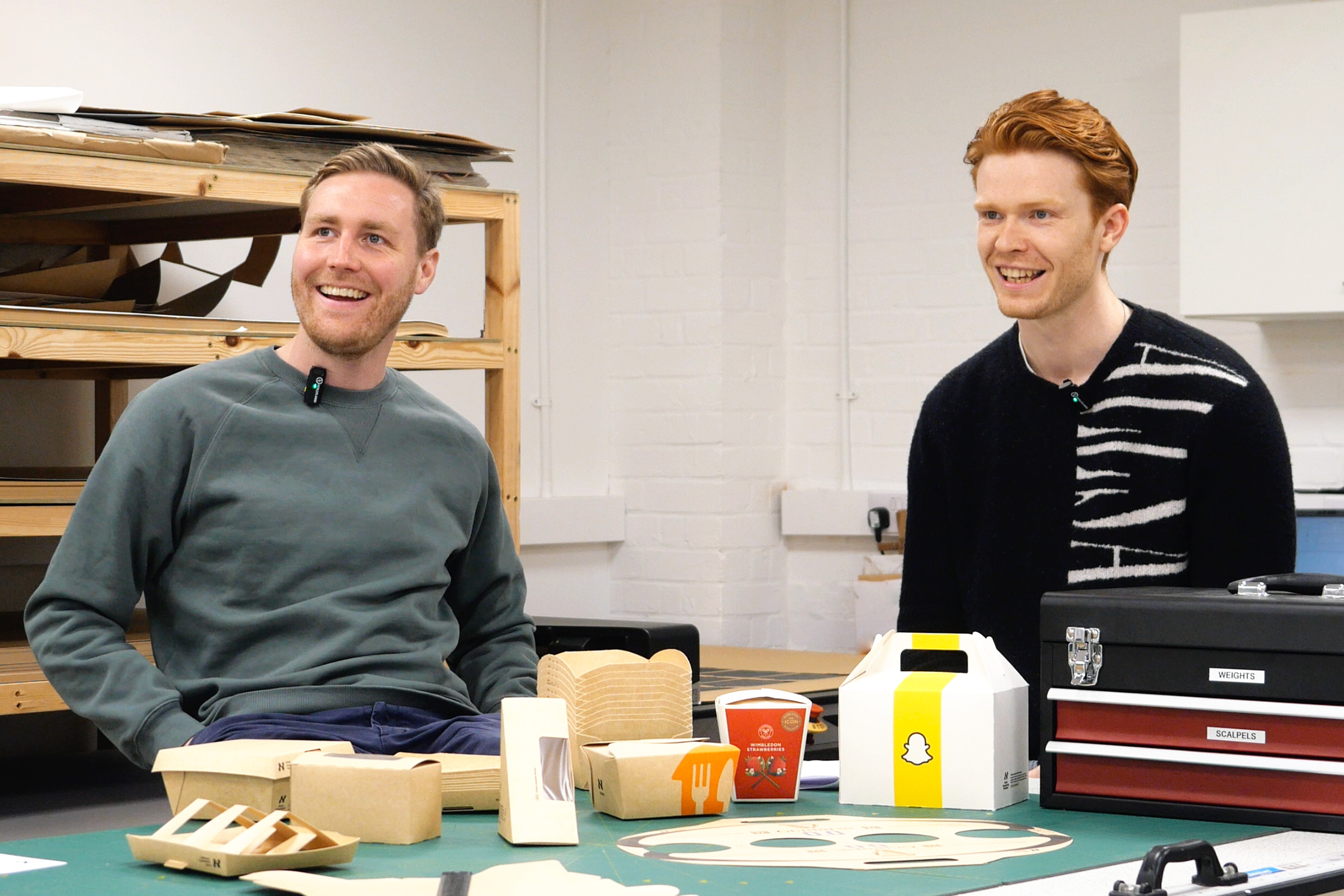
From bespoke print to completely new packaging formats, there’s a lot that goes into creating the right packaging for a customer.
At Notpla, much of that work sits with product designers Tom and August. They’ve spent seven and eight years at Notpla respectively and have worked on the foodservice packaging project almost since its conception, helping take seaweed-coated board from its earliest development through to packaging now being produced and used at scale.
“We’ve both been at the company and specifically with this project pretty much since its conception,” says August. “It’s been really nice to go from the initial idea of the project, through lab scale, all the way to millions of units of plastic replaced.”
Today, their work can start in all sorts of places. A customer might want to bring their own branding to one of our existing formats, adapt a design around a particular food, or work with the team to develop something new.
We sat down with Tom and August to find out how they approach those briefs, why they like to get into the material as quickly as possible, and what it takes to turn a flat sheet of seaweed-coated board into finished packaging.
“I would say we’re always trying to origami our way out of situations,” says August.
Much of Tom and August’s work starts with something simple: a flat sheet of our seaweed-coated board and a customer brief.
“Someone will come to us with a brief and we like to get into the material very quickly,” explains August. “We might make a quick drawing on the computer and make physical products. Sometimes we do it first time, but often it’s two or three iterations.”
That hands-on approach means ideas can quickly become something physical. The team can fold, test and adapt a design rather than waiting until much later in the process to see how it actually works.
As August puts it, much of their day-to-day work is “turning flat coated board into folded product.”
What that folded product becomes depends on the customer.
For some customers, the right packaging format already exists.
One of Notpla’s established designs, for example, is our clip-and-close box, made from a separate base and lid.
“A lot of our customers come wanting their logo or their artwork on our products,” says Tom.
That means bespoke work can be as much about the print as the structure itself.
Notpla limits the amount of ink used across its packaging to ensure it doesn’t compromise the end-of-life properties of the material. That gives Tom and August another design consideration when working with customer artwork.
“We’ll put colour where we need to, but we’ll remove it where we don’t need it,” explains August. “That ends up with a really nice aesthetic, I think. They’re quite recognisable products.”
For other customers, an existing format might provide the starting point but needs adapting around the food or the way it will be served.
And sometimes the team needs to develop something completely new.
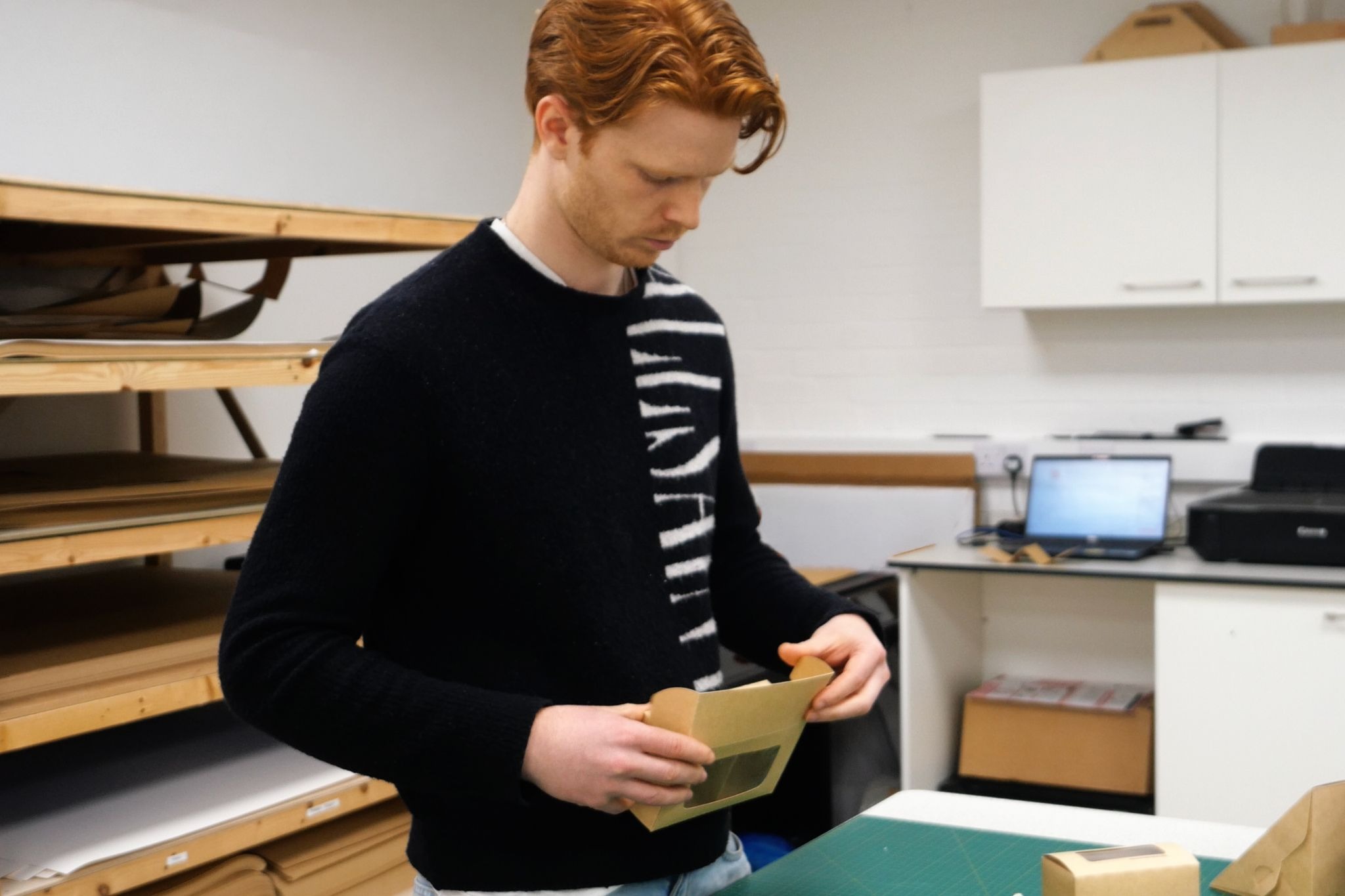
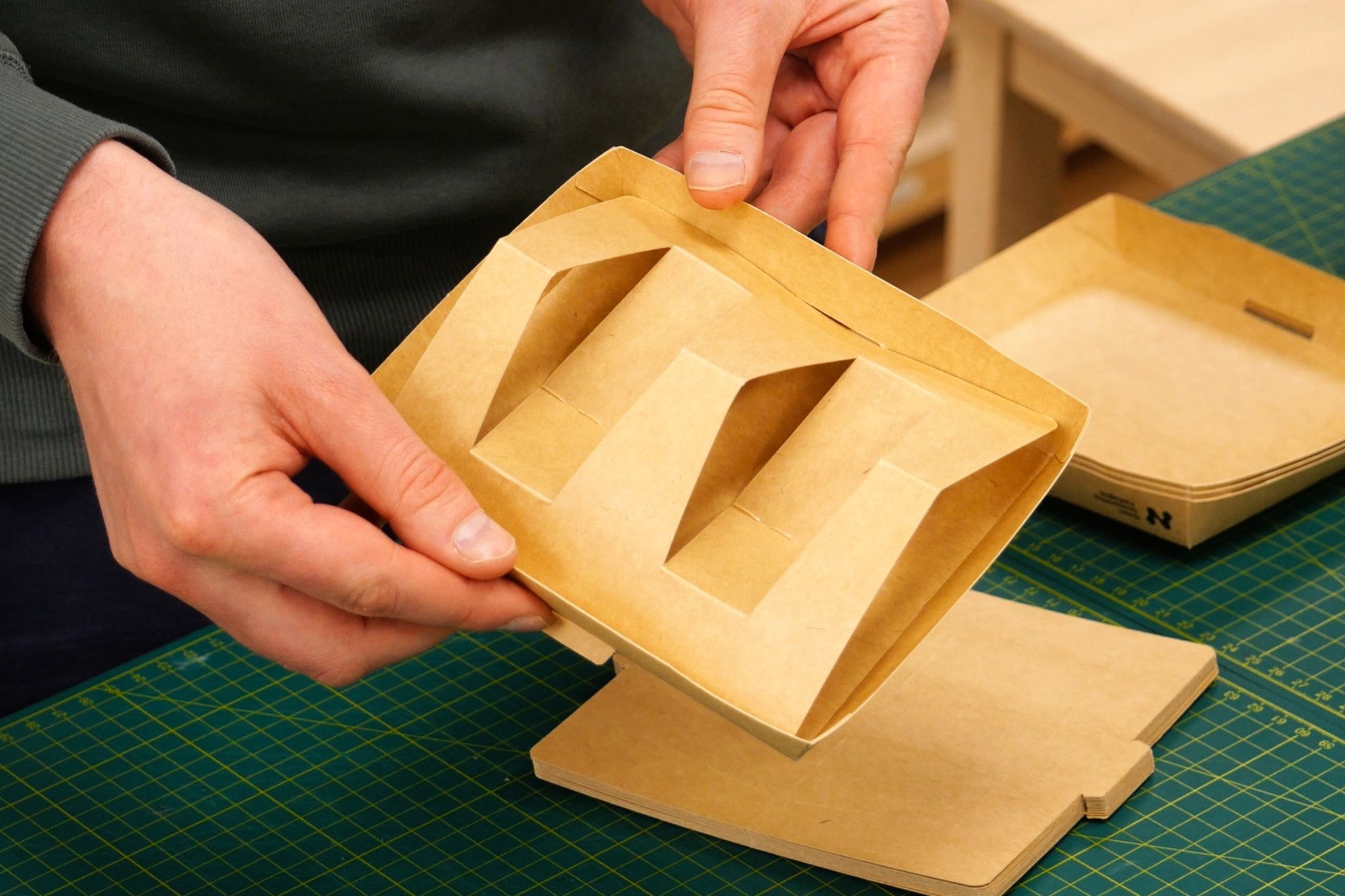
One of Tom’s favourite recent projects began with a customer looking for packaging specifically designed to hold tacos.
“One of the projects I’m really proud of at the moment is this taco holder,” he says.
Rather than designing every part of the packaging from scratch, Tom found a way to make use of one of Notpla’s existing lids and develop a new structure that could sit inside it to hold the tacos.
The answer might look simple now. Getting there wasn’t necessarily obvious.
“That was a funny one because it came from a customer request,” says August. “I looked at it and was like, ‘I have no idea how I’m going to do that.’ Tom took it over and really quickly came up with a really simple design.”
It’s a good example of what bespoke development can look like in practice: understanding the food and the customer’s requirements, looking at what already exists, and finding the simplest way to make it work.
It also shows why having two designers looking at the same challenge can help.
“We work really well as a team because we can bounce ideas off each other,” says August.
“Quite often when someone’s made a first attempt, someone else can quickly have a look at it and think, ‘Maybe you can change this, this or this.”
Those different strengths become particularly important when a design needs to move beyond a hand-built prototype.
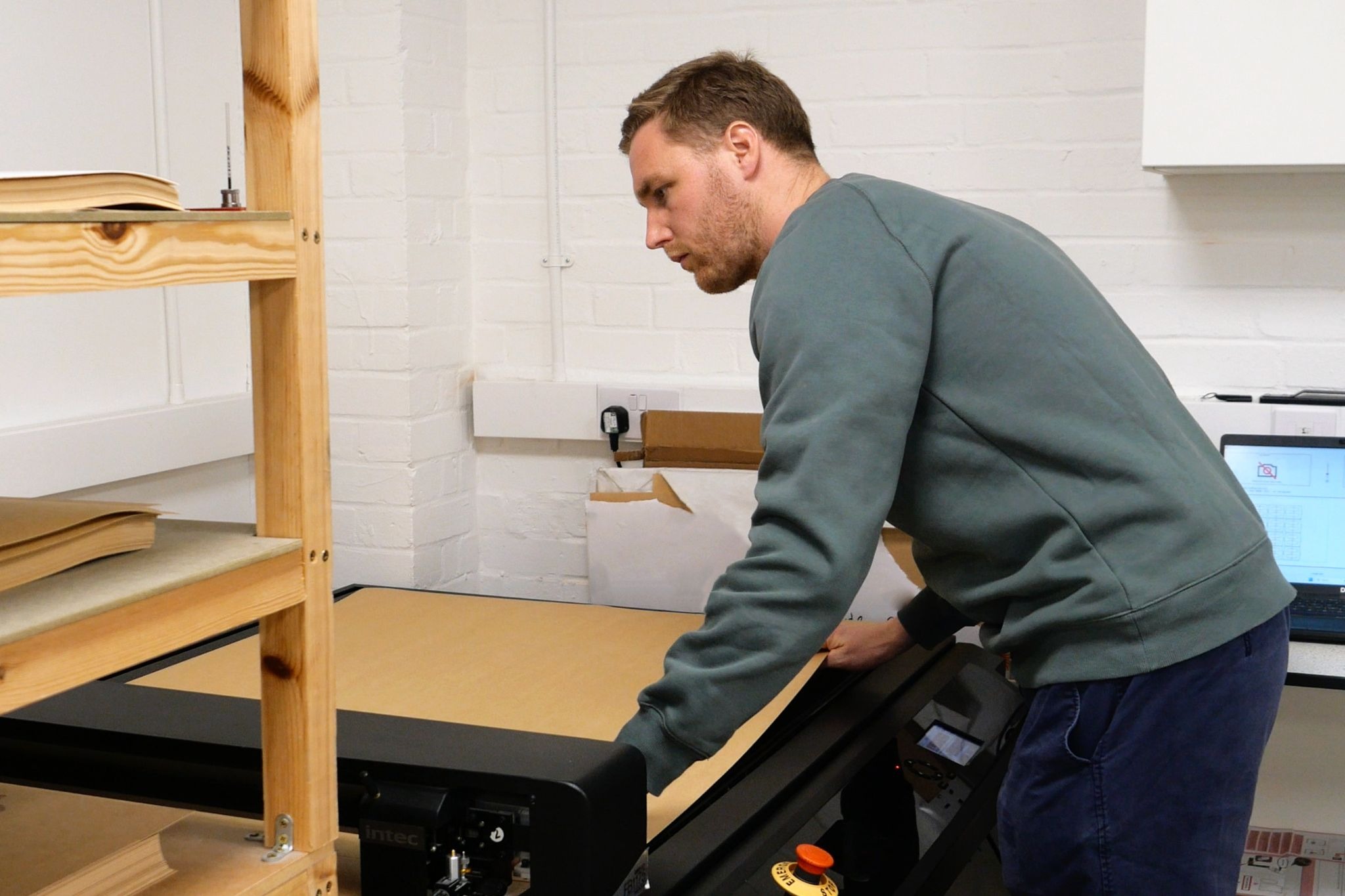
Creating a shape that works is one thing. Creating something that can be manufactured efficiently and consistently is another.
“We were taught when we trained as designers to understand the process and identify what the strengths and weaknesses of any process are,” explains August.
That means spending time with the manufacturing partners who turn their designs into finished packaging and understanding the machinery and processes available to them.
“Tom’s really good at that when he goes to manufacturers,” says August. “Getting really good relationships with our manufacturers, working out what the machines are that we want to exploit.”
It means manufacturing isn’t something considered once the design is finished. It’s part of how the team thinks about the packaging from the start.
For both Tom and August, working on real customer challenges is one of the most rewarding parts of the job.
“What we really love is working with customers on live briefs,” says Tom. “That’s really rewarding for us, because then we can see our products in the market.”
After seven and eight years on the project, they’ve also seen those designs end up in some slightly less expected places.
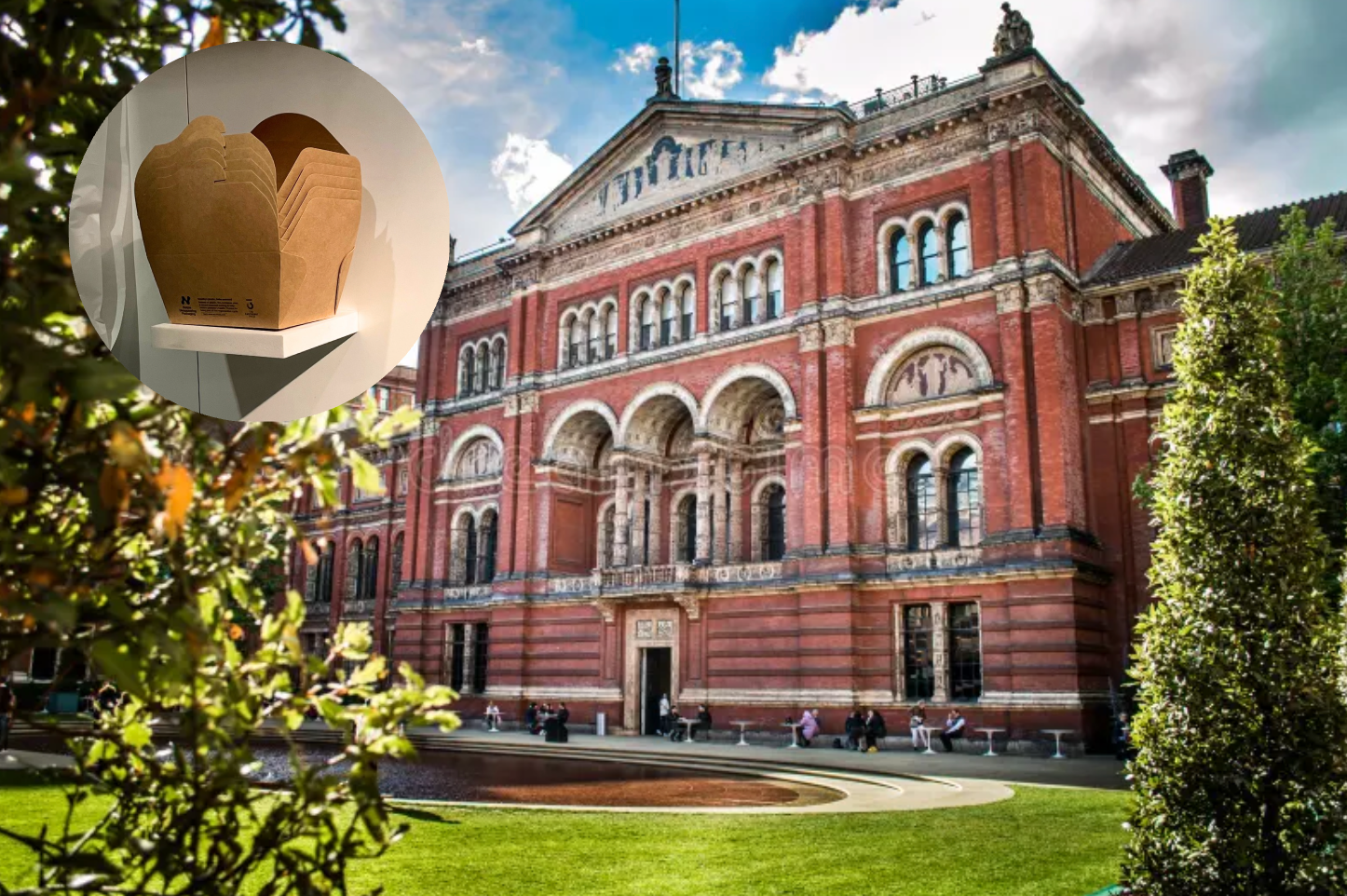
“We’ve got one of the Notpla boxes in the V&A,” says Tom.
For August, it’s a particularly significant milestone given where the project started.
“As someone who was here from the beginning of this project, where we were just putting the seaweed onto the board for the first time, that’s really an amazing achievement to have it now in the V&A.”
And the opportunities for what they can design have continued to develop alongside Notpla’s materials.
One of Tom and August’s biggest recent projects was SeaView, which brought together two Notpla technologies in one packaging range: our seaweed-coated board and transparent seaweed film.
“It was the first project we both worked jointly on,” says August. “It was the first time we’d combined two of our products, the SeaView film and our coated board, to make sandwich packaging and packaging with vision.”
Developing the range meant taking on manufacturing challenges the team hadn’t encountered before.
“That was really exciting,” August adds. “Doing things we hadn’t really done before, pushing the boundaries of our manufacturers.”
The work went on to be recognised at the FPA Awards, where the SeaView range received a design award.
It’s another marker of how far the project has come since Tom and August first started working with seaweed-coated board.
From the Earthshot Prize to seeing a Notpla box in the V&A, Tom and August have seen some significant moments during their time on the project.
But the next customer brief is never far away.
“We want to hit those next milestones, as long as we keep going the way we are and engaging with as many clients as possible, I think we’ll do that and continue to work on exciting stuff.”
For Tom and August, that means more customer briefs, more prototypes and probably plenty more opportunities to “origami” their way out of a new packaging challenge.
Our foodservice range covers a wide variety of formats, but we know different foods and businesses can have different packaging requirements.
Whether you’re looking for bespoke print, need to adapt an existing format or have a food packaging need that requires something new, our product design team can work with you to explore what’s possible.
Talk to our team about your packaging requirements - get in touch.
Yes. Depending on the requirements of a project, Notpla can offer bespoke print, adaptations to existing foodservice packaging or work with customers to develop completely new packaging formats.
Yes. Bespoke print is available across selected Notpla foodservice packaging, allowing brands to bring their own artwork and branding onto the packaging.
Yes. Where an existing format isn’t suitable, our product design team can work with customers to understand the food, how it will be served and what the packaging needs to do before developing and testing potential designs.
The process varies depending on the brief. Our product designers typically move quickly from an initial brief into drawings and physical prototypes, often developing a design over two or three iterations. The team also considers how the packaging can be manufactured at scale as part of the design process.
Our foodservice packaging uses a seaweed-based coating that provides the grease and water resistance needed for food applications, replacing the conventional plastic coating typically used on foodservice board.
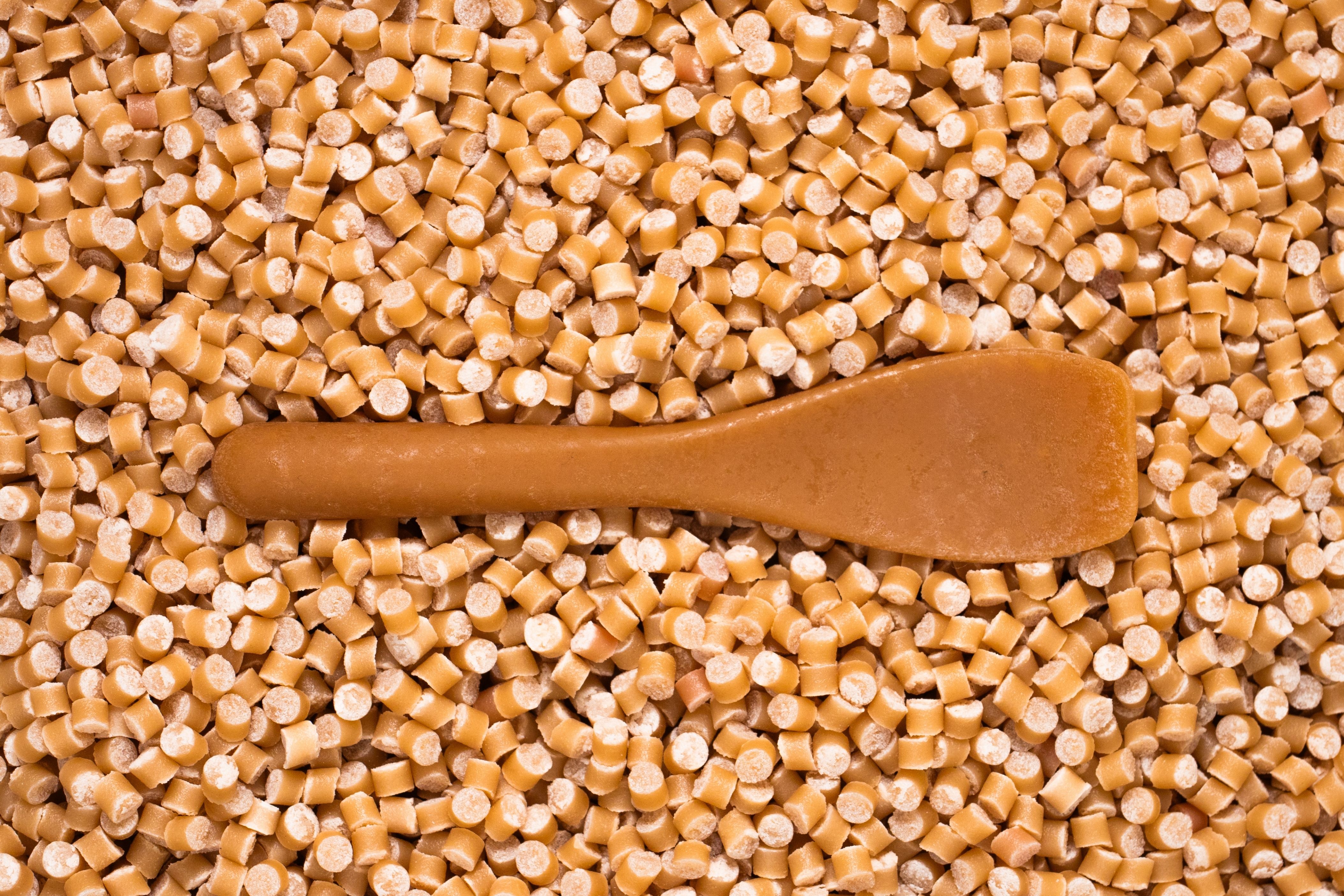 The end of plastic versus paper: Why natural materials belong in modern manufacturing
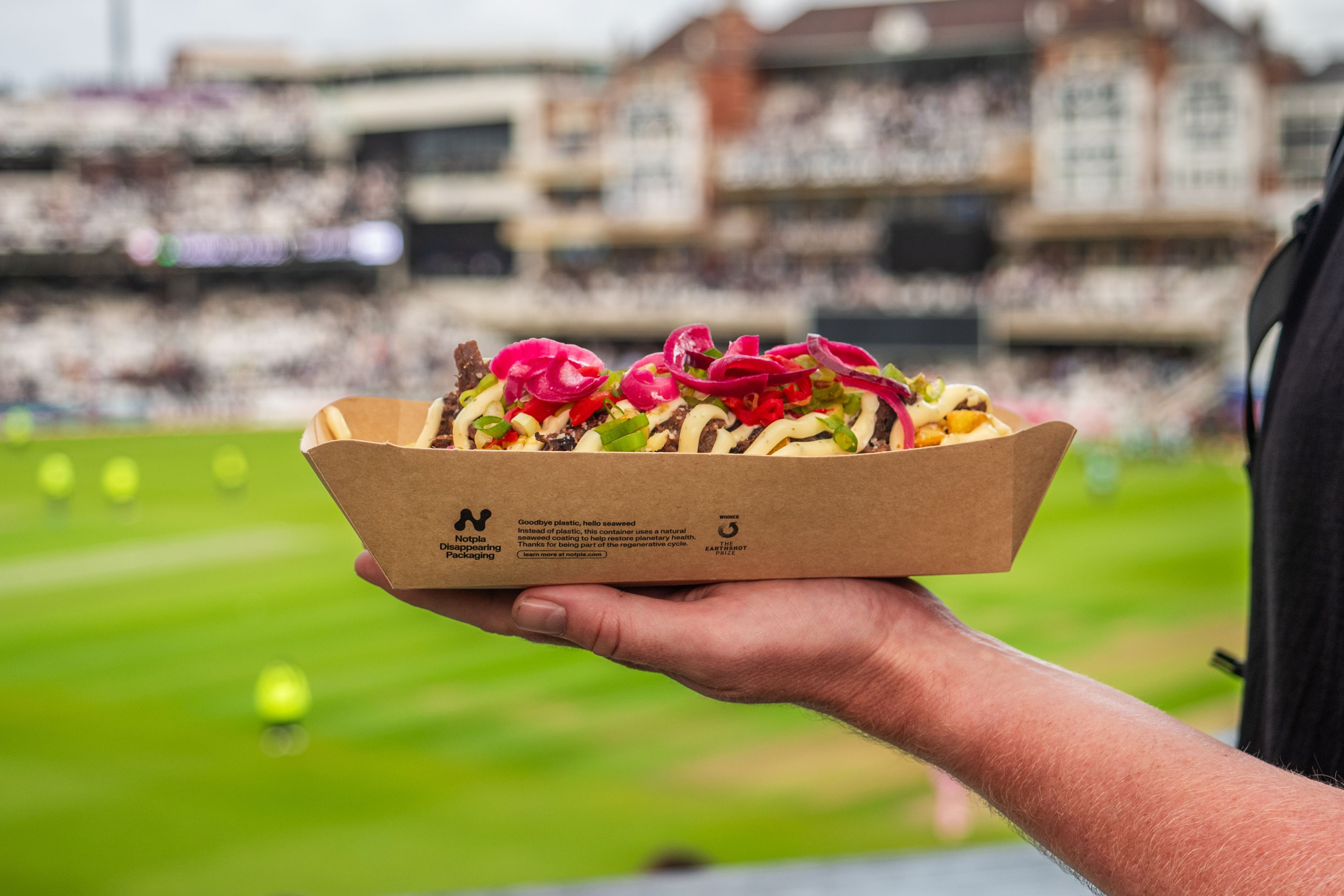 Notpla Stadium Range: building sustainable packaging into the big-game experience, at scale with Levy.
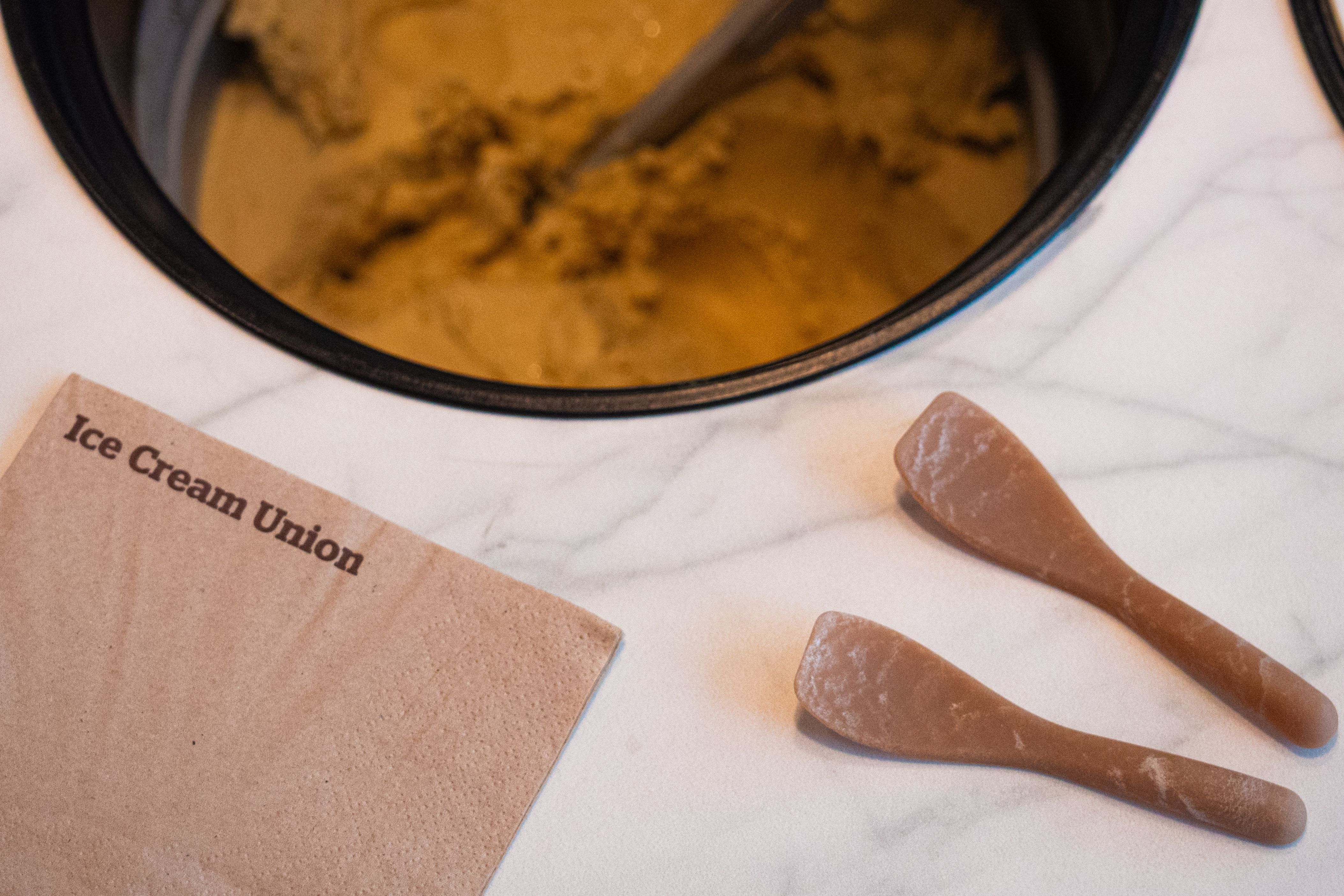 Why premium ice cream brands are switching to plastic-free spoons: Lessons from Ice Cream Union
