
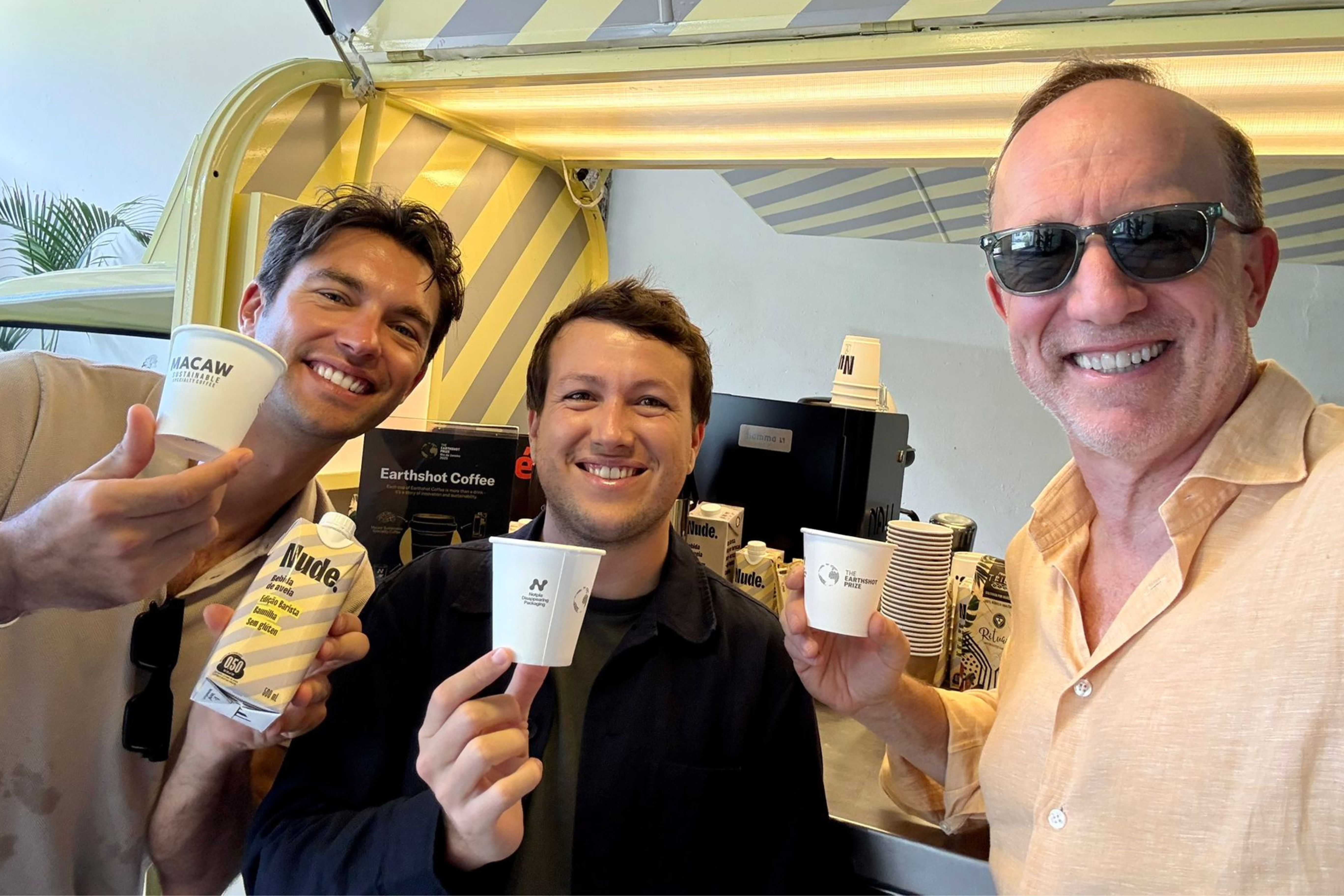
In October 2025, during Earthshot Prize Week in Rio de Janeiro, we served espresso in something we had been quietly working toward for years: a coffee cup coated with seaweed instead of conventional plastic lining.
It wasn’t a commercial launch. It wasn’t a finished product. But it was the first public trial of our Gen 1 espresso cup, and a meaningful moment in our journey to remove hidden plastic from your everyday single-use food and drink experiences.
Now, a few months on, it feels right to share what that trial represented, what we learned, and where it’s taking us next.
Let’s start with the problem: the plastic inside the cup.
Most takeaway coffee cups look like paper. In reality, they are lined with a thin layer of plastic to prevent leakage.
When hot liquid is poured into them, that lining can release nanoplastic particles straight into our drinks.
A recent study found that drinking from disposable plastic-lined cups just once or twice a week could expose a person to up to 74,000 microplastic particles per year (PubMed Central, 2024).
Microplastics are now found in oceans, soil, air and increasingly in our bodies. While research into long-term health impacts is ongoing, the presence of plastic where it simply doesn’t need to be raises serious concern.
For us, the inside of a coffee cup is one of those places.
During Earthshot Week, we partnered with The Earthshot Prize, Klabin, and Macaw Coffee to pilot our Gen 1 espresso cup in a real-world setting, which is exactly how we like to trial innovation at Notpla.
The cup’s interior surface, the part in direct contact with the drink, was coated with our seaweed-based material.
Seaweed is a remarkable material. It grows rapidly without freshwater, fertiliser, or arable land. It absorbs carbon as it grows and supports marine ecosystems. It doesn’t compete with food crops.
For us, it isn’t just an ingredient, it’s an active collaborator in redesigning packaging.
We chose to begin with espresso intentionally. Its smaller format, and the fact it is typically consumed quickly, made it an ideal starting point to test performance under heat and liquid contact.
It allowed us to move from laboratory development into real service conditions in a controlled and practical way.
To achieve a functional seal in this first generation, a small amount of industry-standard adhesive is used at the base and seam. We are transparent about that.
This is not yet a fully natural solution, but it removes plastic from the surface that matters most: the one touching your drink.
Seeing the cup in action in Rio was significant for several reasons.
First, it demonstrated that a plastic-free coating can function in a hot beverage application, long considered one of the most technically demanding categories in single-use packaging.
Second, it showed that this innovation can integrate with industrial paperboard production.
Working alongside Klabin allowed us to explore how seaweed coatings can sit within existing manufacturing infrastructure, rather than requiring an entirely new system from scratch.
And third, it moved the conversation forward.
Instead of asking whether plastic is necessary inside coffee cups, we were able to show that alternatives are already being built and tested.
It was a pilot. But it was also proof.
Shortly after the Earthshot trial, we announced that Notpla secured a €4 million Horizon Europe grant to accelerate the development of a plastic-free single-use coffee cup at scale.
The Gen 1 espresso cup trial and the Horizon project are closely connected, but they are not the same.
Rio was about demonstrating feasibility in the real world. Horizon is about advancing the material science, sealing technology, and industrial pathways needed to scale this innovation across Europe.
Through Horizon, we are working with partners across the value chain to:
Gen 2, featuring a natural adhesive, is already in development.
Each iteration brings us closer to a cup that is entirely derived from nature.

The inside of a coffee cup is easy to overlook. It’s thin. Invisible. Functional. Most people never question it.
But revolutions in materials rarely begin with spectacle. They begin with layers.
By removing plastic from the surface that touches your coffee, we are beginning to challenge a decades-old assumption about how packaging must be made.
Returning to Earthshot Prize Week three years after winning in 2022, this time with a working seaweed-coated hot drink cup, felt like a quiet but meaningful milestone.
It wasn’t about perfection. It was about momentum. The Gen 1 espresso cup is not the final answer.
But it represents something important: the shift from asking if this is possible, to showing that it is already underway.
And from Rio to Horizon, we’re building what comes next. One material breakthrough at a time.
.jpg) The end of plastic versus paper: Why natural materials belong in modern manufacturing
The end of plastic versus paper: Why natural materials belong in modern manufacturing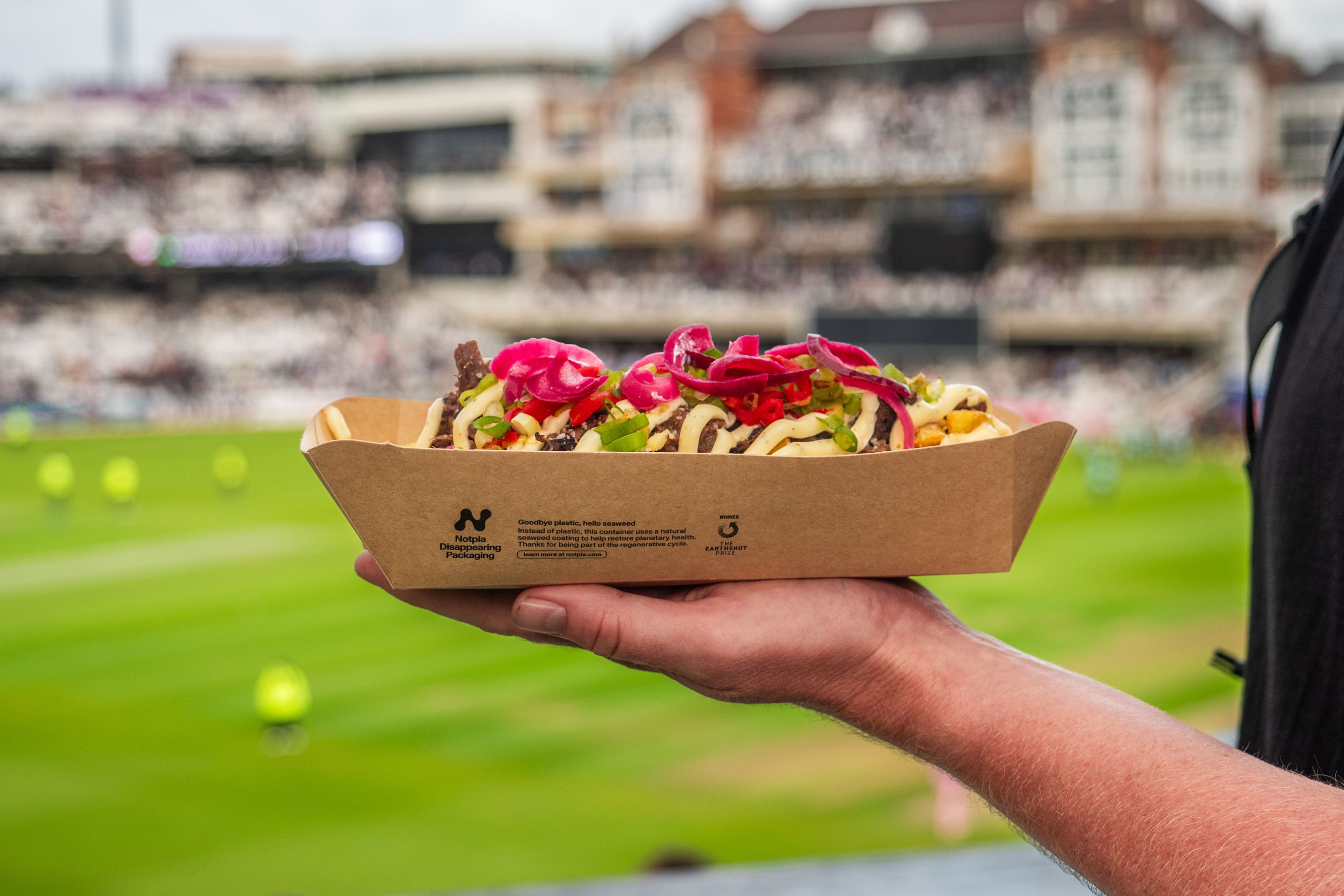 Notpla Stadium Range: building sustainable packaging into the big-game experience, at scale with Levy.
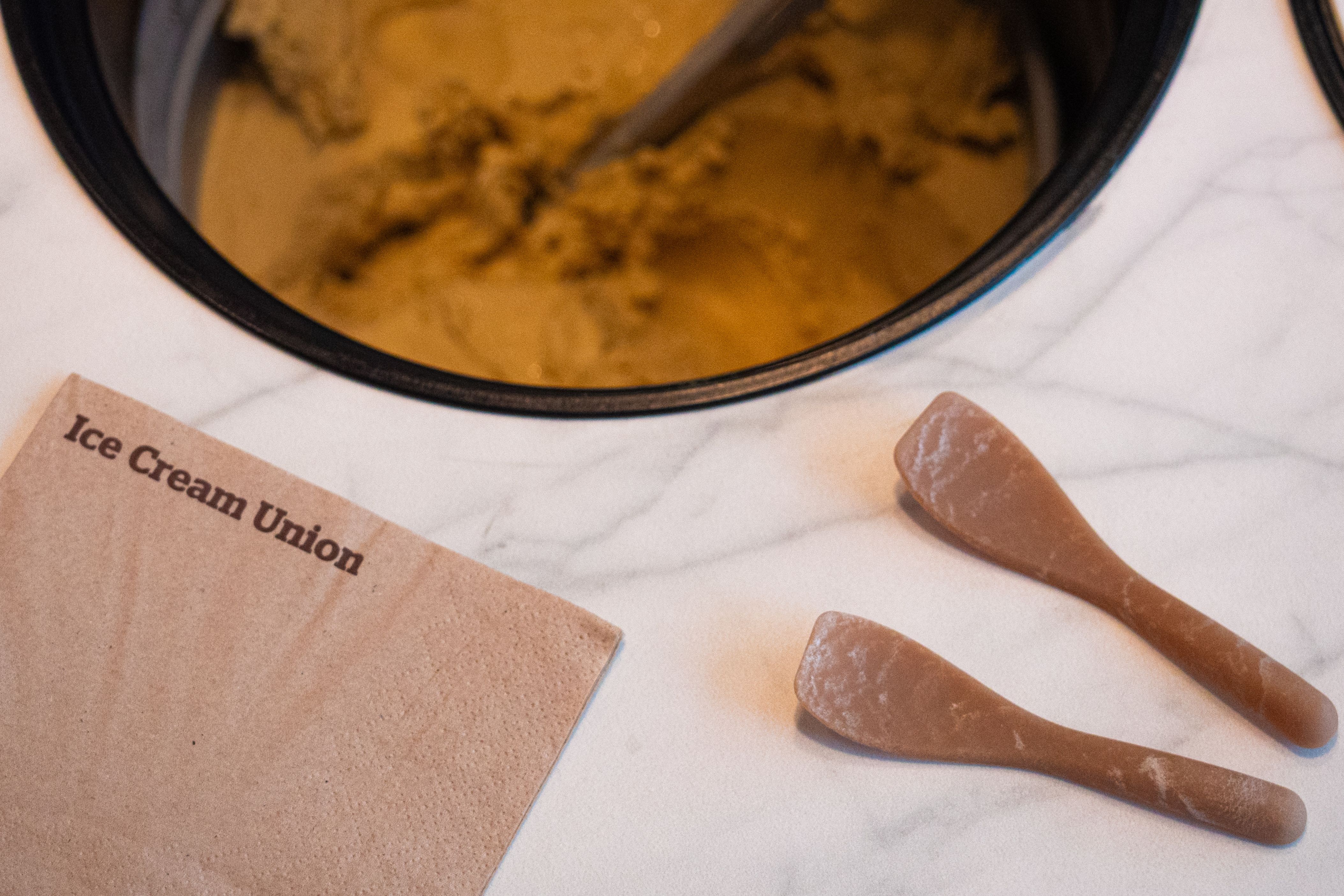 Why premium ice cream brands are switching to plastic-free spoons: Lessons from Ice Cream Union