
.jpg)
Scientists from Plymouth Marine Laboratory (PML) have returned from Svalbard, where they’ve deployed an experiment designed to answer one critical question:
How do different materials behave when they leave the lab and enter the real world?
This is one of the first field trials as part of Horizon Project, a Horizon Europe-funded project led by Notpla to remove plastic from single-use coffee cups.
At its core, the project is focused on creating a natural coating to replace the thin plastic lining inside traditional coffee cups.

Most takeaway coffee cups appear to be paper.
In reality, they’re a paper-plastic composite, lined with a thin layer designed to prevent leakage.
“It’s hard to imagine, but it is estimated that up to 250–300 billion single-use ‘paper cups’ are discarded worldwide each year.”
Dr Matthew Cole, Plymouth Marine Laboratory
As a mixed material, these cups are difficult to recycle. In the UK, fewer than 3%* are recycled. The majority are incinerated, sent to landfill, or enter the environment.
And once there, plastic doesn’t simply disappear.
* Single-use cups and on-the-go fibre-composite food packaging, WRAP 2022
Microplastics have now been detected in some of the most remote environments on Earth, including the Arctic.
Plastic pollution doesn’t stay where it’s created or where it’s used. Ocean currents can carry materials from the North Sea into the Arctic Ocean, where they accumulate.
“It’s important that we know what happens if, or more likely, when this litter finds its way into this environment.”
Dr Matthew Cole
Plymouth Marine Laboratory (PML) chose Svalbard not just because it’s remote, but because it represents one of the most extreme testing environments available:
If materials break down here, it tells us something meaningful about how they behave globally.
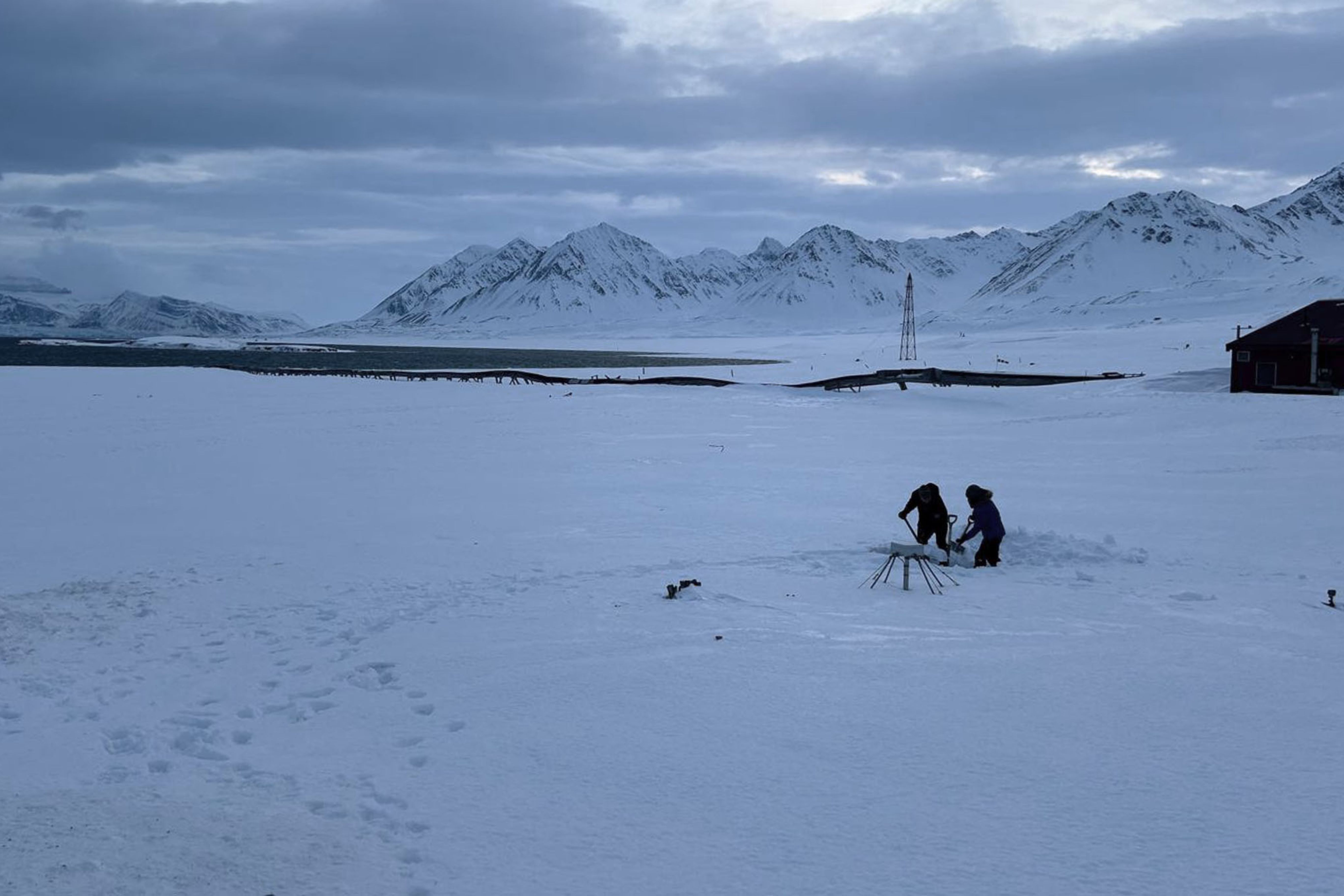
The Arctic marks the first of five global deployment sites in this study. At each location, researchers are comparing how natural coffee cup linings degrade over time when compared to on the market solutions:
Before deployment, the team prepared 30 experimental boards, each fitted with material samples.
Baseline measurements were taken to allow for direct comparison as the materials are exposed to real environmental conditions over time.
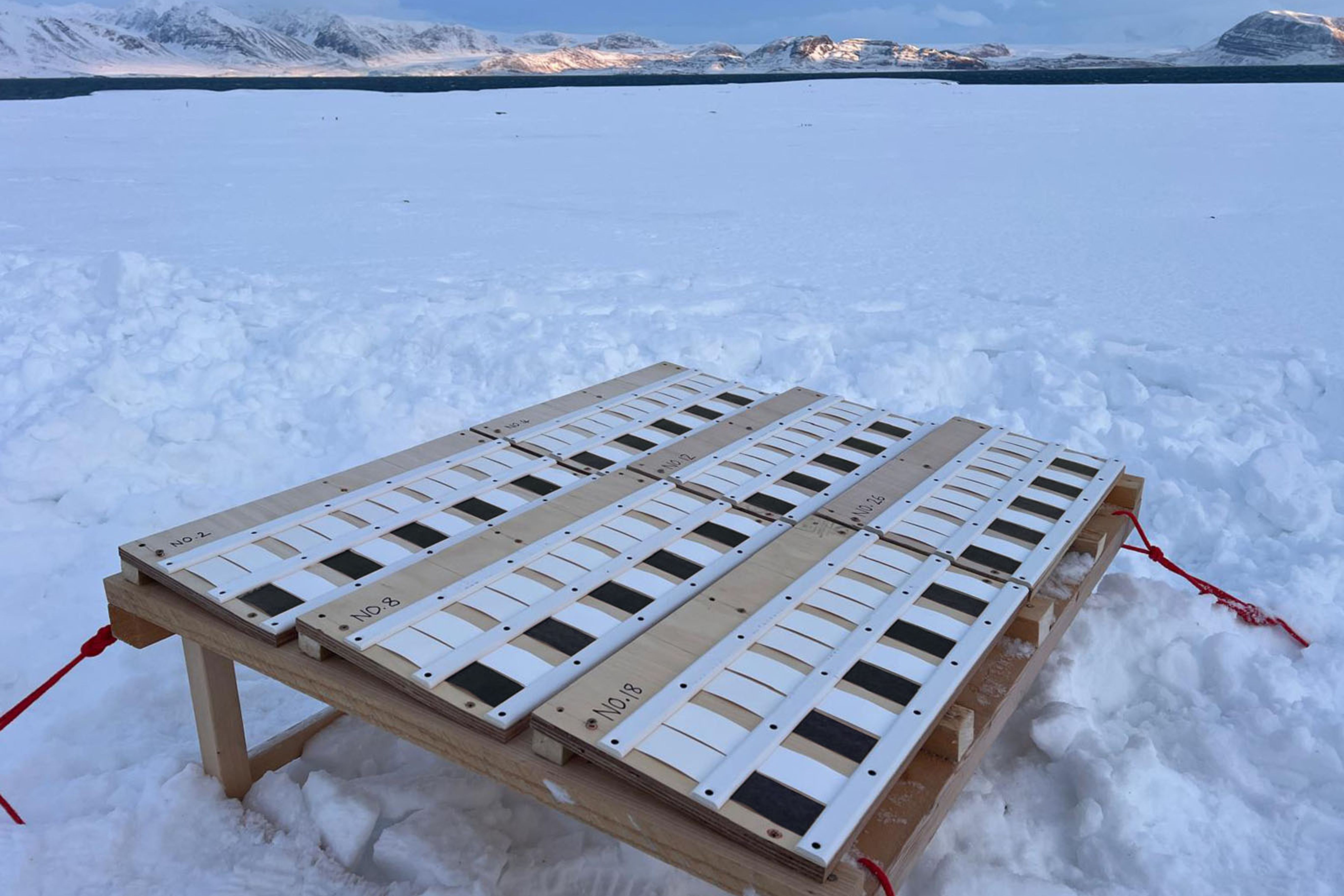
Materials labelled as “biodegradable” or “compostable” are often tested under controlled laboratory conditions. But real environments are far more complex.
“One of the fundamental challenges with plastic pollution is that most products were never designed with their end-of-life in mind.”
Professor Pennie Lindeque, Plymouth Marine Laboratory
This project is about ensuring that the materials we design today don’t become the problems of tomorrow.
By testing materials in the environments they may actually end up in, researchers can begin to understand:
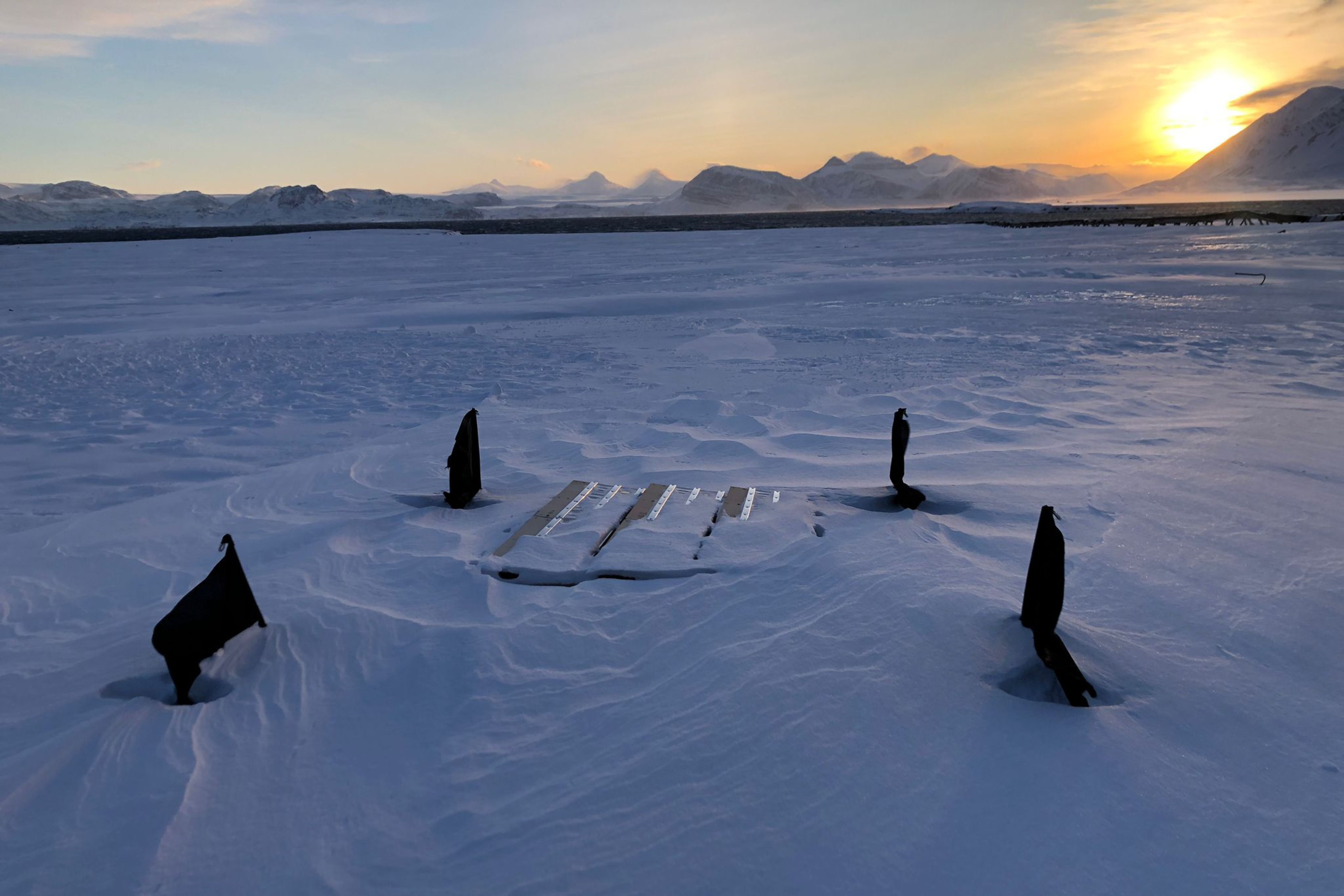
The journey to Svalbard began in February, just after the region’s period of continuous darkness.
Once on site, the work quickly shifted from controlled lab preparation to hands-on fieldwork.
“It was cold, around –5°C during our time there, but the week before it had been closer to –40.” Dr Rachel Coppock, Plymouth Marine Laboratory
Working with locally sourced materials, the team constructed a bespoke frame to hold the experimental boards.
In true fieldwork fashion, this included sourcing materials from waste streams and repurposing them on site.
“It was great to be able to give the wood a second life, rather than it ending up in landfill or being incinerated.”
Professor Pennie Lindeque
Once assembled, the frame was secured into the frozen ground with support from the British Antarctic Survey.
Shortly after installation, the structure was buried under snowdrift, a reminder of just how dynamic these environments are.
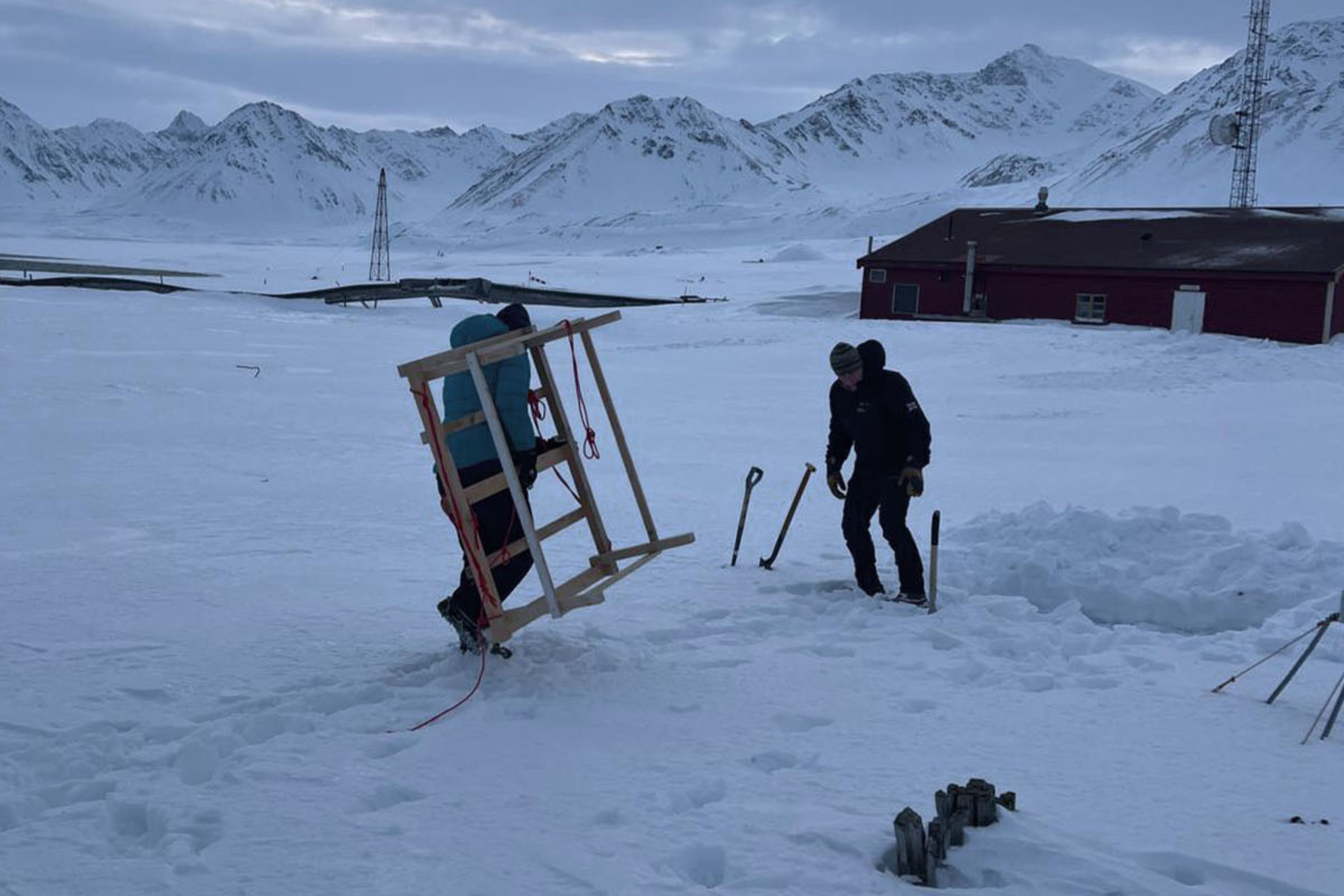
Each site includes six identical boards, which will be collected at set intervals over a six-month period.
Samples from the Arctic will be retrieved by partners at the UK Arctic Station and the Norwegian Polar Institute, before being returned to Plymouth Marine Laboratory for analysis.
The aim is to build a clearer picture of how materials behave across:
“Testing these materials in the Arctic allows us to move beyond the lab and understand how they behave under real environmental conditions.” Professor Pennie Lindeque
Plastic pollution is a global issue. Even the most remote environments are not untouched.
This project is about ensuring that the materials we design today don’t become the problems of tomorrow.
“What’s exciting about this project is that we’re testing next-generation materials alongside conventional plastics, giving us a clear picture of whether these alternatives are truly better.”
Dr Rachel Coppock
For Notpla, this is a critical step. Not just in developing a plastic-free coffee cup, but in proving that it works beyond the lab, in the environments where materials ultimately end up.
The Arctic is the first of several global deployment sites.
Over the coming months, the research team will continue to monitor how materials change across different environments, from polar regions to more temperate and urban settings.
Each dataset brings us closer to understanding what “better” really means when it comes to materials.
And how to design packaging that works with the world around it, not against it.
Stay up to date with the Horizon project and future experiments.
Funded by the European Union. Views and opinions expressed are however those of the author(s) only and do not necessarily reflect those of the European Union . Neither the European Union nor the granting authority can be held responsible for them.
.jpg) The end of plastic versus paper: Why natural materials belong in modern manufacturing
The end of plastic versus paper: Why natural materials belong in modern manufacturing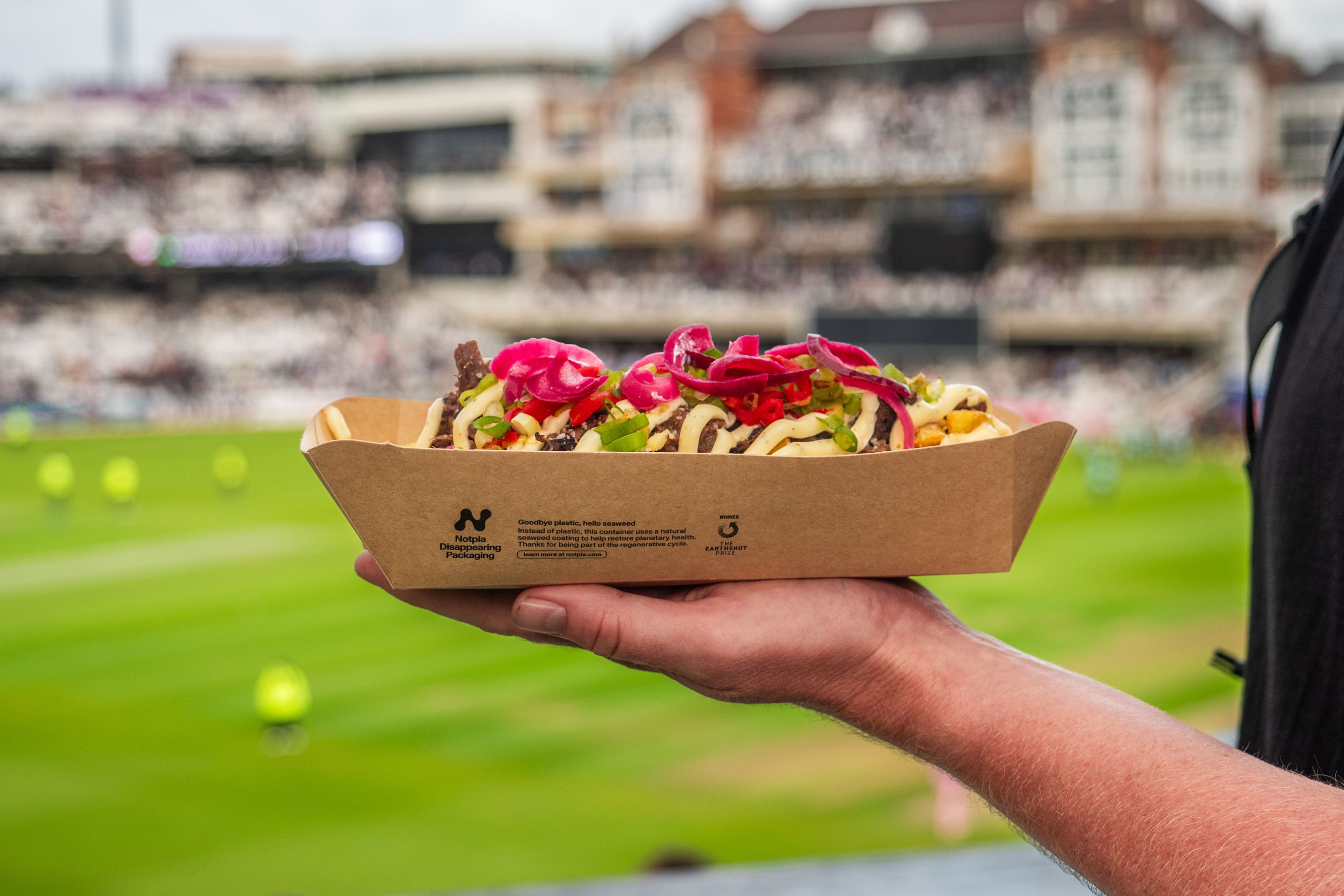 Notpla Stadium Range: building sustainable packaging into the big-game experience, at scale with Levy.
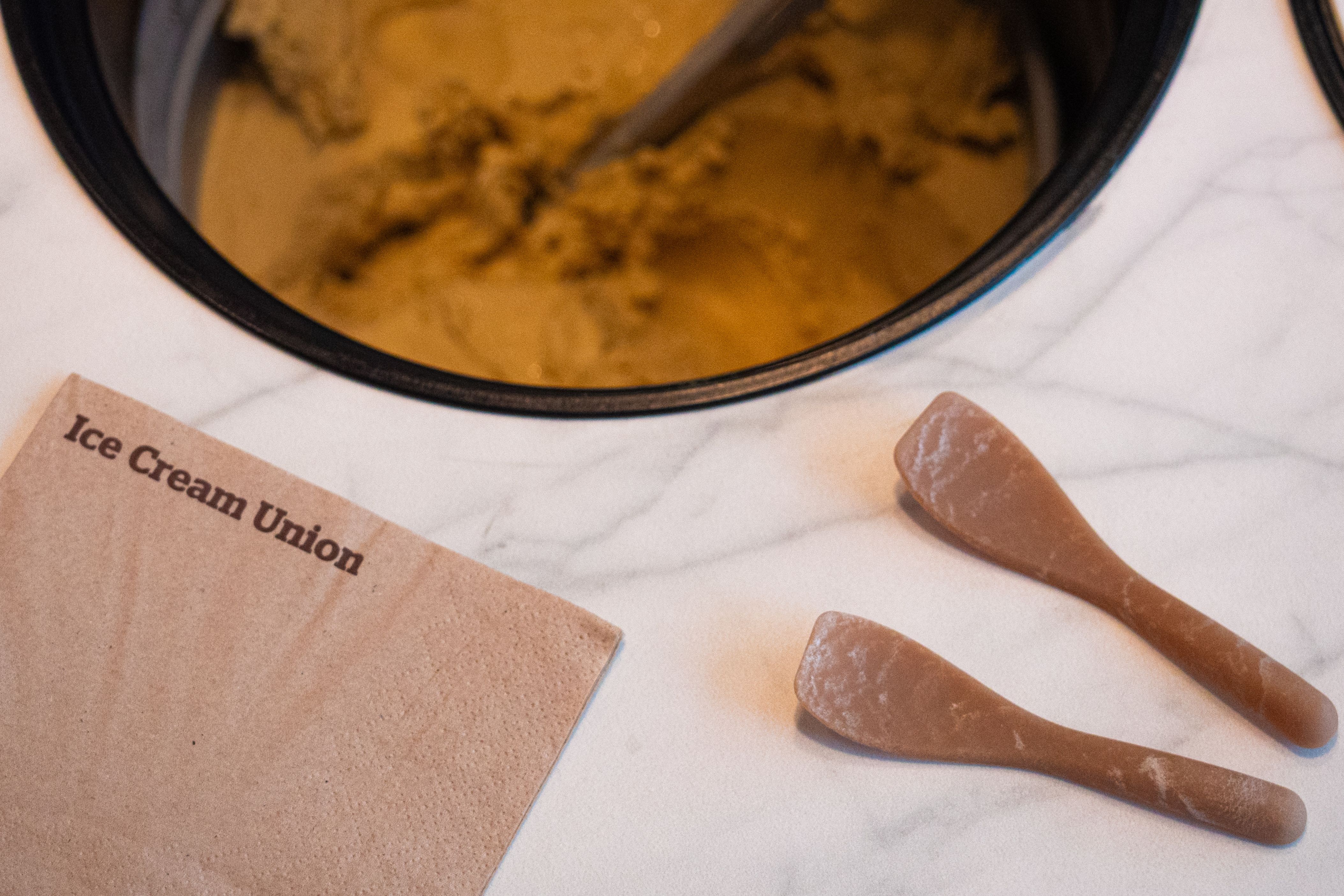 Why premium ice cream brands are switching to plastic-free spoons: Lessons from Ice Cream Union