

Notpla boxes have arrived at The Kia Oval. This pioneering move marks an important juncture between sports and sustainability, bringing Surrey County Cricket Club fans an unprecedented sustainable experience.
As a venue committed to becoming carbon-neutral by 2030, The Kia Oval were early to embrace sustainable solutions across its operations. In partnership with Notpla, the stadium introduced our seaweed-based packaging to cricket fans, creating a guilt-free way to enjoy food without the lingering consequences of plastic waste.
“With Notpla's innovative sustainable packaging, we take another stride towards our Net Zero goals.” - Emily Iveson-Pritchard, Head of Sustainability at The Kia Oval.
Our seaweed-coated packaging, admired by many for its ingenious approach to sustainability, now graces one of the most iconic cricket grounds in the world. This introduction has set the stage for other Levy-operated stadiums to follow suit. Notpla packaging is compostable, water and grease-resistant, and, most importantly, free from the plastic and "forever chemicals" that plague traditional takeaway boxes. Fans at The Kia Oval are not just watching cricket—they’re participating in a movement toward a more sustainable future.
This shift at The Kia Oval resonates with the global movement we've seen among consumers – a craving for transparency in packaging and a guilt-free path to enjoy their food. Our answer to this call came in the form of Notpla seaweed-coated boxes, and many more products.
As our co-founder and co-CEO, Pierre Paslier, expressed, “By launching Notpla packaging, the Oval is taking a big step in adopting truly sustainable packaging solutions, enabling cricket fans to enjoy their favourite meals without the plastic waste.”

Each box is lined with our unique Notpla Coating, a seaweed-derived formulation. Like its plastic counterparts, this coating possesses grease and water-resistant properties. However, it offers an entirely different end-of-life scenario: the boxes can be disposed of guilt-free in a home compost.
Our Notpla Coating aligns perfectly with the EU Single-Use Plastic Directive that aims to ban synthetic materials like PLA, PHA, and other bioplastics. There's no plastic or "forever chemicals" like PFA in our coating, ensuring we leave no harmful traces behind in the environment.
The Kia Oval's dedication to incorporating Notpla's packaging across the entirety of its fan zones not only makes a statement to other stadiums that they too can follow in its steps, but the uncompromising rollout is having a real-world impact on their carbon emissions.

So next time you find yourself at The Kia Oval, in the midst of a cricket match, you'll be holding one of our Notpla boxes. It's a beautiful blend of sustainability and sports, allowing you to cheer for your club and the planet, all at once.
Find out more on Notpla's takeaway packaging on our coatings page, and read more about our work with the Surrey County Cricket Club here.
.jpg) Bespoke packaging at Notpla: Meet the team behind our food packaging design process
Bespoke packaging at Notpla: Meet the team behind our food packaging design process.jpg) The end of plastic versus paper: Why natural materials belong in modern manufacturing
The end of plastic versus paper: Why natural materials belong in modern manufacturing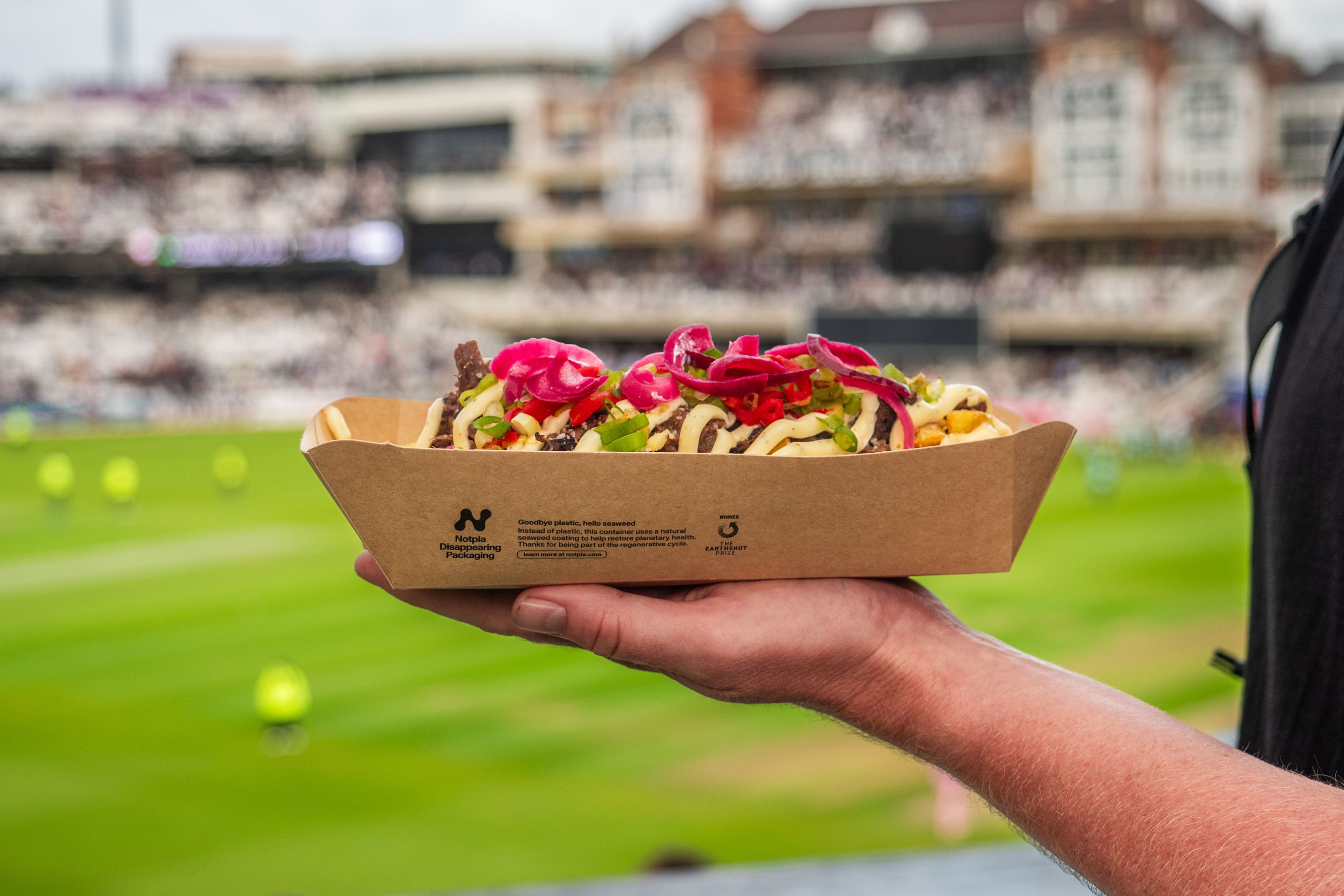 Notpla Stadium Range: building sustainable packaging into the big-game experience, at scale with Levy.