
Last week, we hosted our first-ever Swap with Notpla webinar, bringing together sustainability leaders, foodservice operators and packaging experts to discuss the questions rapidly changing the future of food packaging:
For decades, the packaging industry has focused on what happens after a product is used. Recycling rates. Waste streams. Litter and pollution. Those conversations remain important.
But increasingly, businesses are asking a different question:
What materials are touching our food? What chemicals might they contain? What are consumers, regulators and businesses beginning to learn about the long-term impacts of those materials?
Throughout the discussion, one theme emerged again and again:
The future of food packaging will be shaped by a combination of science, regulation and business action.
The webinar opened with insights from Notpla's CEO and Co-Founder Pierre Paslier, who explored the growing body of research around microplastics and human exposure.
For years, public concern around plastic has focused on waste and the impact to oceans, rivers and wildlife. Today, attention is increasingly turning towards the impact plastics may have much closer to home.
Research into microplastics is still evolving, but awareness is accelerating. Scientists have identified microplastics in human blood, lungs, placentas and other tissues, prompting new questions about where these particles come from and how people are exposed to them.
As Pierre explained:
"When it comes to the plastic that we ingest, a large portion of that is actually coming from food packaging."
The implications are significant.
For decades, the industry has largely viewed food-safe plastics as inherently harmless. Today, businesses are beginning to look more closely at material composition, migration, additives and the substances that come into contact with food throughout a product's life.
As Pierre reflected:
"Maybe in some aspects we have had a false sense of safety."
The conversation is no longer only about what packaging leaves behind in the environment. It's also about what packaging leaves behind in us.
This shift is not being driven by science alone. Consumers are asking tougher questions about materials. Procurement teams are scrutinising supplier claims more closely. Brands are looking for ways to future-proof decisions in an increasingly complex landscape.
Kevin Watson, Director of Sustainability at Levy, shared how these changing expectations are influencing one of the UK's largest foodservice operators.
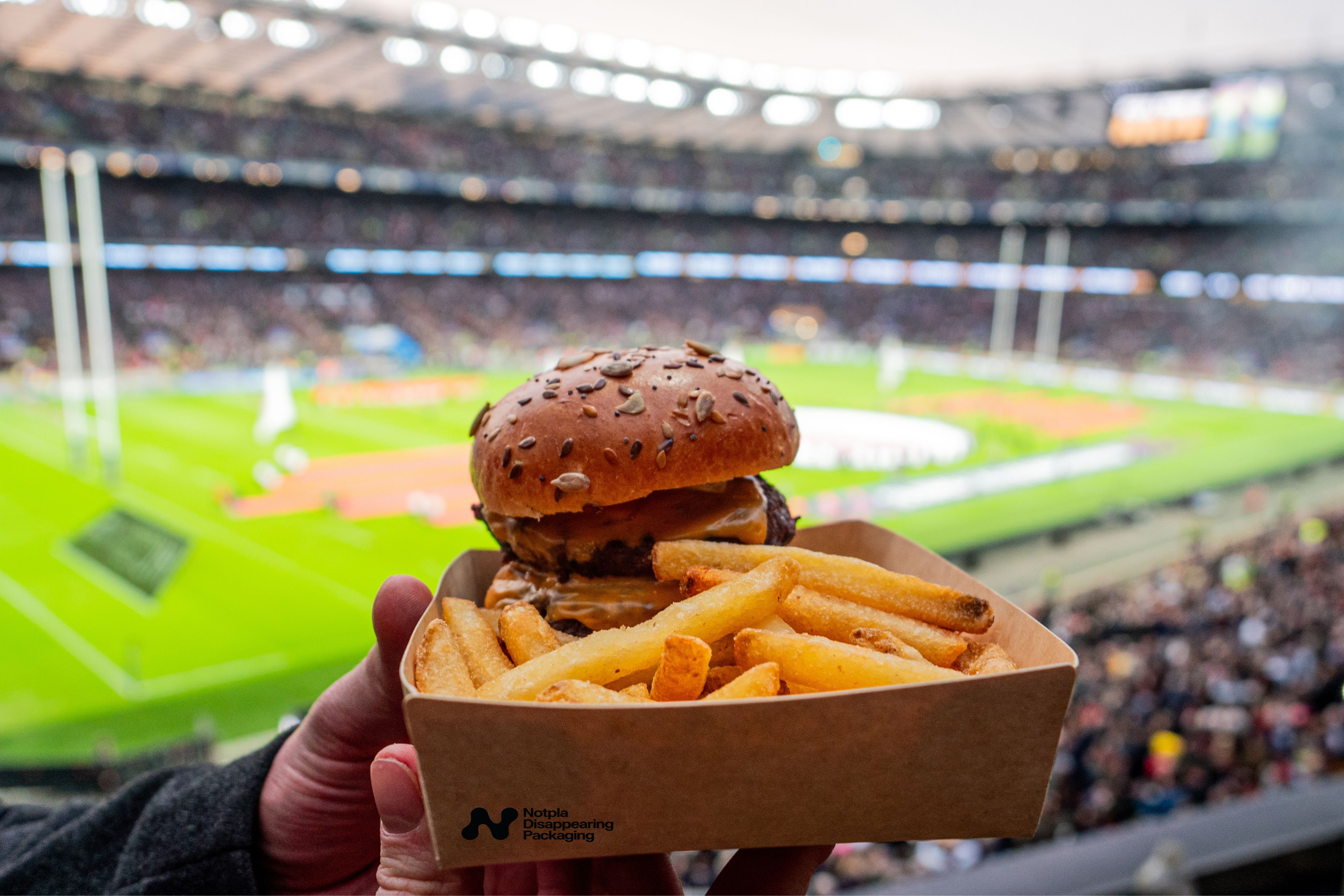
Levy serves more than 15 million guests each year across major venues including Wimbledon, The O2, Allianz Stadium and ExCeL London. At that scale, packaging decisions have significant operational impact. But sustainability is no longer viewed as a standalone initiative.
As Kevin explained:
"People want to know the purpose of your business and what you're doing."
Perhaps most tellingly, sustainability performance now influences commercial accountability throughout the organisation.
"20% of all contracted bonuses sit within sustainability."
What was once considered a specialist topic has become a business priority.
Alongside changing consumer expectations, regulation is evolving rapidly.
Notpla Head of Impact Hoa Doan outlined how legislation including Extended Producer Responsibility (EPR), the Single-Use Plastics Directive and the Packaging and Packaging Waste Regulation (PPWR) is reshaping the packaging landscape across Europe.
The direction is clear.
Future regulation is increasingly focused not only on what happens to packaging at end-of-life, but on what materials are used in the first place.
Chemical content, recyclability, transparency and evidence are becoming central considerations.
As Hoa highlighted:
"It's no longer just about end-of-life packaging materials."
Businesses that once relied on supplier assurances are increasingly being asked for proof.
"Just their word saying there's no PFAS is now not good enough."
Testing, certification and traceability are rapidly becoming part of responsible procurement.
While regulation and corporate commitments often dominate industry discussions, meaningful change also happens at the level of individual businesses.
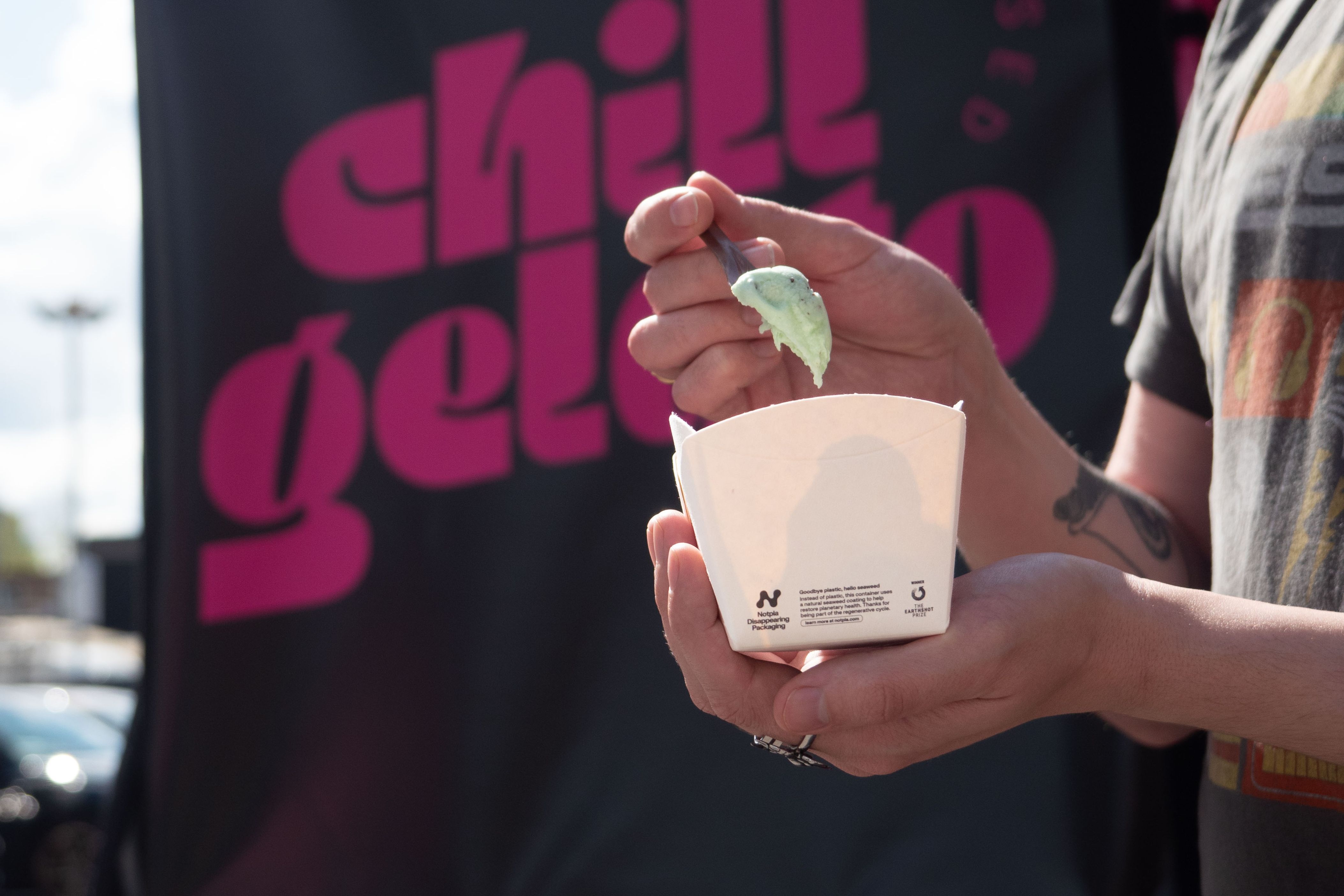
Fabio Pomaro, Founder of Chill Gelato, shared his own journey of reassessing the materials used across his business.
Like many operators, he initially believed he was already making responsible choices.
"I thought I was doing good."
But greater understanding led to deeper questions.
Where do materials come from? What are they made of? Are sustainability claims backed by evidence?
For Fabio, the goal was never simply to follow a trend.
"I didn't just want to say I was sustainable because it was fashionable."
Instead, sustainability became embedded into day-to-day decision-making, demonstrating that meaningful progress often begins with curiosity rather than perfection.
If there was one message that connected every speaker, it was this:
The future belongs to businesses willing to ask better questions.
What materials are touching food?
What evidence supports supplier claims?
How will regulations evolve over the next five years?
Are today's packaging choices aligned with tomorrow's expectations?
These are no longer questions for sustainability teams alone. They are questions for procurement, operations, leadership teams and brands alike.
Notpla's first Swap with Notpla webinar brought together perspectives from science, sustainability, legislation and frontline foodservice operations.
While each speaker approached the topic from a different angle, they arrived at the same conclusion.
The conversation around food packaging is changing.
Waste still matters.
Recycling still matters.
But increasingly, businesses are recognising that packaging decisions sit at the intersection of environmental impact, human health, regulation and commercial performance.
The organisations that understand that shift today will be best positioned for tomorrow.
As Pierre concluded:
"You have the power to shape better decisions and decide what kind of materials touch food."
.jpg) Bespoke packaging at Notpla: Meet the team behind our food packaging design process
Bespoke packaging at Notpla: Meet the team behind our food packaging design process.jpg) The end of plastic versus paper: Why natural materials belong in modern manufacturing
The end of plastic versus paper: Why natural materials belong in modern manufacturing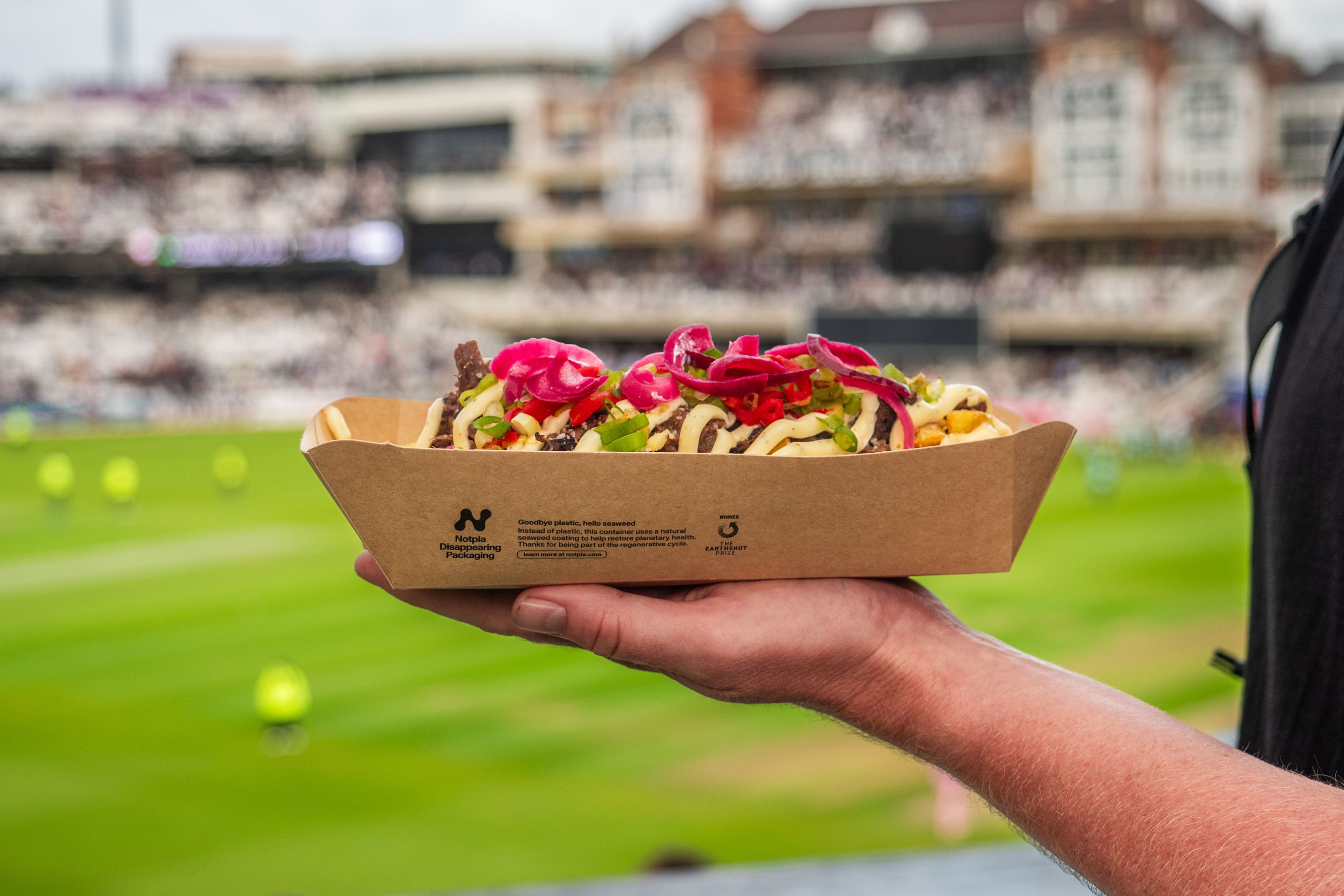 Notpla Stadium Range: building sustainable packaging into the big-game experience, at scale with Levy.