
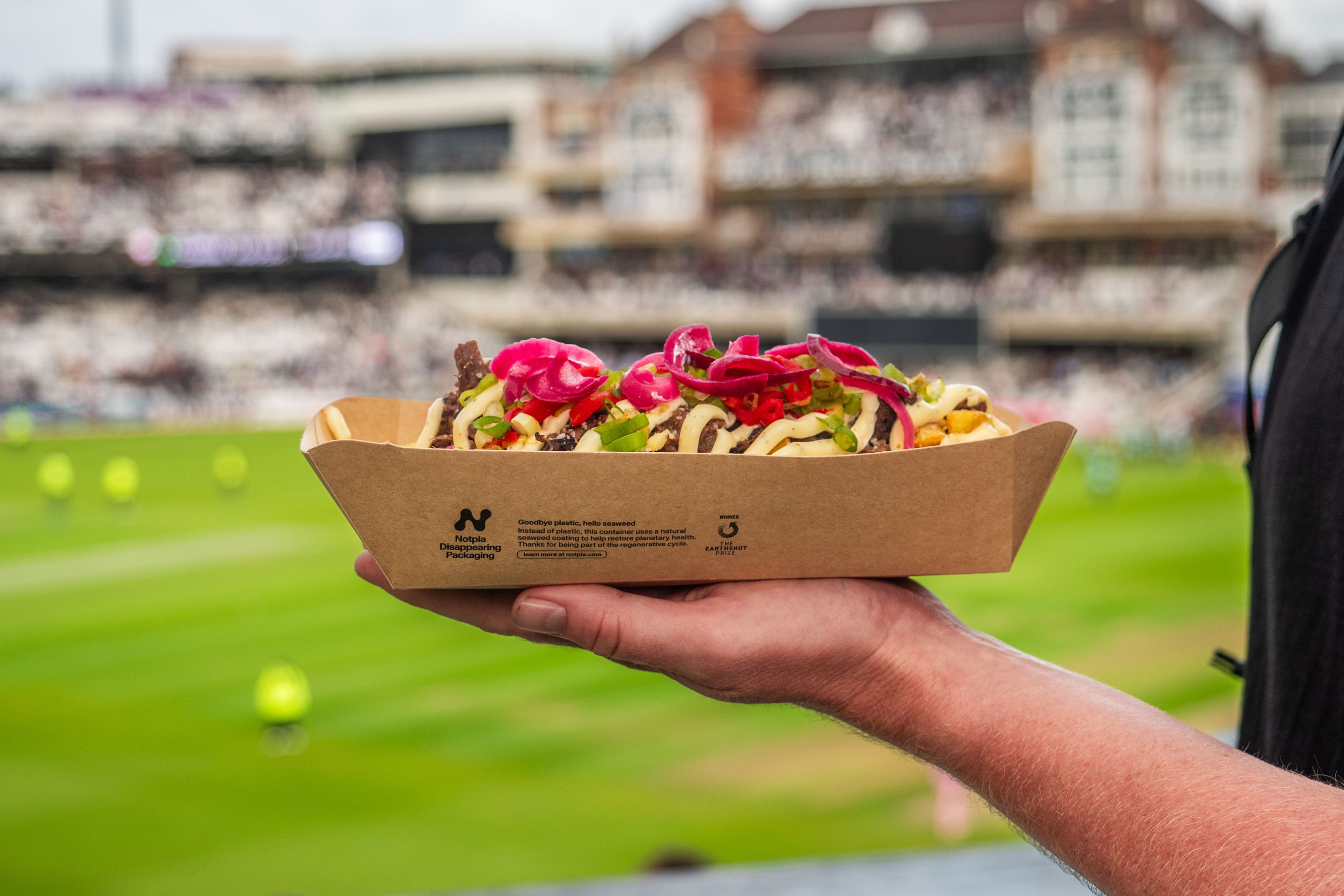
When you're serving thousands of meals in just a few hours, packaging has to do more than support sustainability goals. It needs to perform under pressure, fit seamlessly into existing operations and deliver the experience customers expect.
We sat down with Kevin Watson, Sustainability Director at Levy, to discuss why that perception is changing, what Levy looked for in a packaging partner, and how introducing Notpla across some of the UK's busiest venues has become part of a much bigger sustainability journey.
Levy is the sports, leisure and hospitality division of Compass Group UK & Ireland, delivering food and drink across some of the country's most recognisable venues, including Wimbledon, The Kia Oval, Allianz Stadium and ExCeL London.
For Kevin, helping the business meet its climate commitments means looking beyond individual products or initiatives and asking bigger questions about how hospitality can evolve.
One of those questions has always been packaging.
"One of the biggest challenges facing food service today is the perception that it can't be changed at scale."
It's a challenge Kevin believes has held the industry back for years.
"If you look at other industries, food and drink was always left aside because it was difficult. We're proving that these changes can be made in a robust way at scale for future generations."
Rather than seeing scale as a barrier, Levy has approached it as something to demonstrate.
Packaging wasn't the starting point of Levy's sustainability strategy, but it quickly became an important part of it.
Every year, millions of food and drink items are served across Levy's venues. Small decisions, repeated at scale, can have a significant impact over time.
Finding an alternative to conventional plastic-lined packaging meant looking beyond environmental credentials alone. The right solution also had to work commercially and operationally.
As Kevin explains, the evaluation was thorough.
"Once we understood what the product was, it only took one meeting with Pierre and the team. If we could get all of the factors right for us, logistics, route to market, price and understanding the lifecycle assessment, it was a bit of a no-brainer."
For Levy, sustainability and practicality needed to go hand in hand.
What began as an early conversation has developed into a long-term partnership.
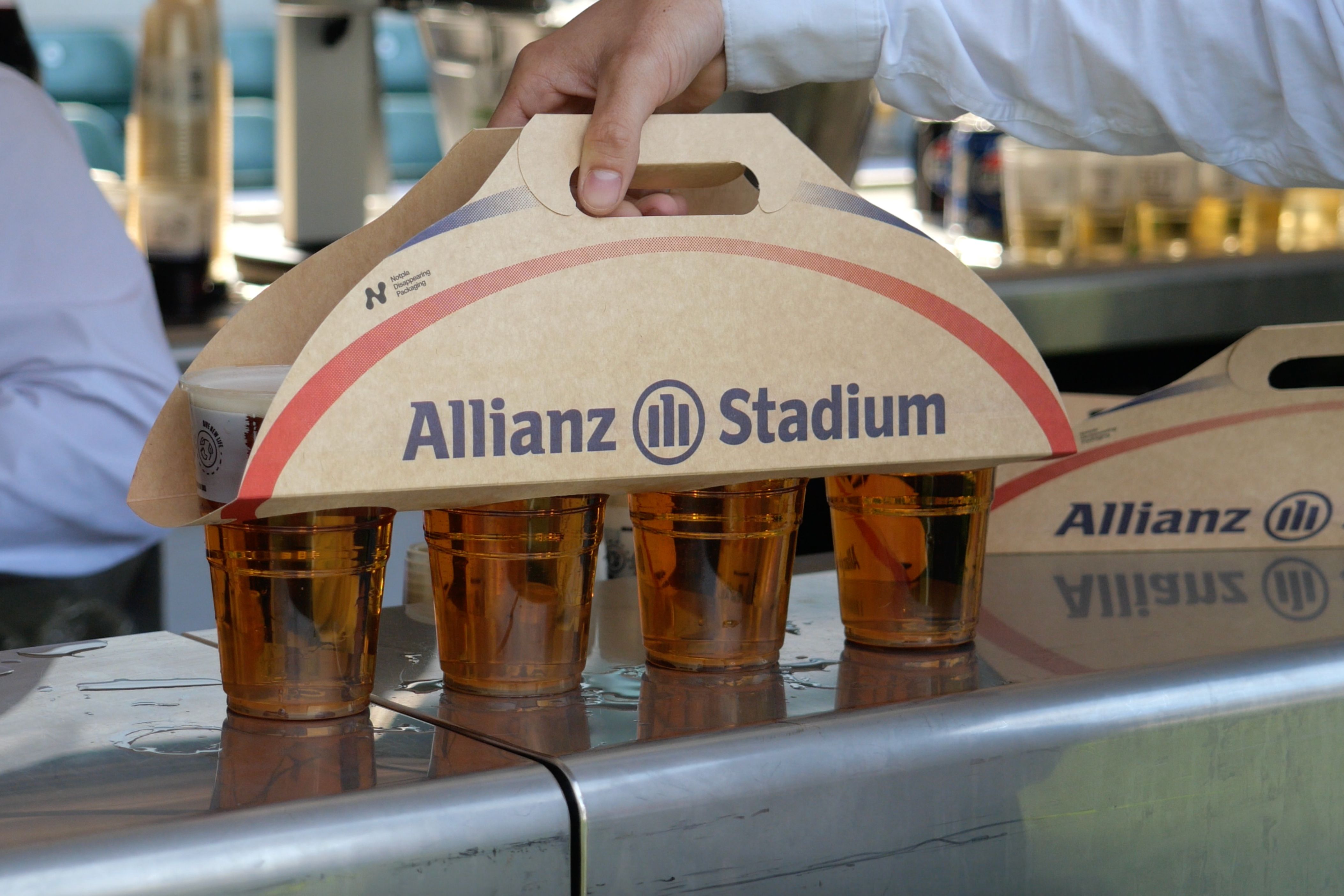
Today, Notpla packaging can be found across a range of Levy venues and applications, from the now-iconic Wimbledon strawberry punnet to bespoke beer carriers designed for Allianz Stadium.
For Kevin, that journey reflects how both organisations have evolved together.
"We've now grown up with Notpla and Notpla have grown up with us."
Rather than introducing a single product, the partnership has continued to develop as new opportunities have emerged across Levy's estate.
Introducing new packaging into high-volume hospitality operations only works if it performs consistently.
At The Kia Oval, Senior Head Chef Danny Lucas has seen that first-hand.
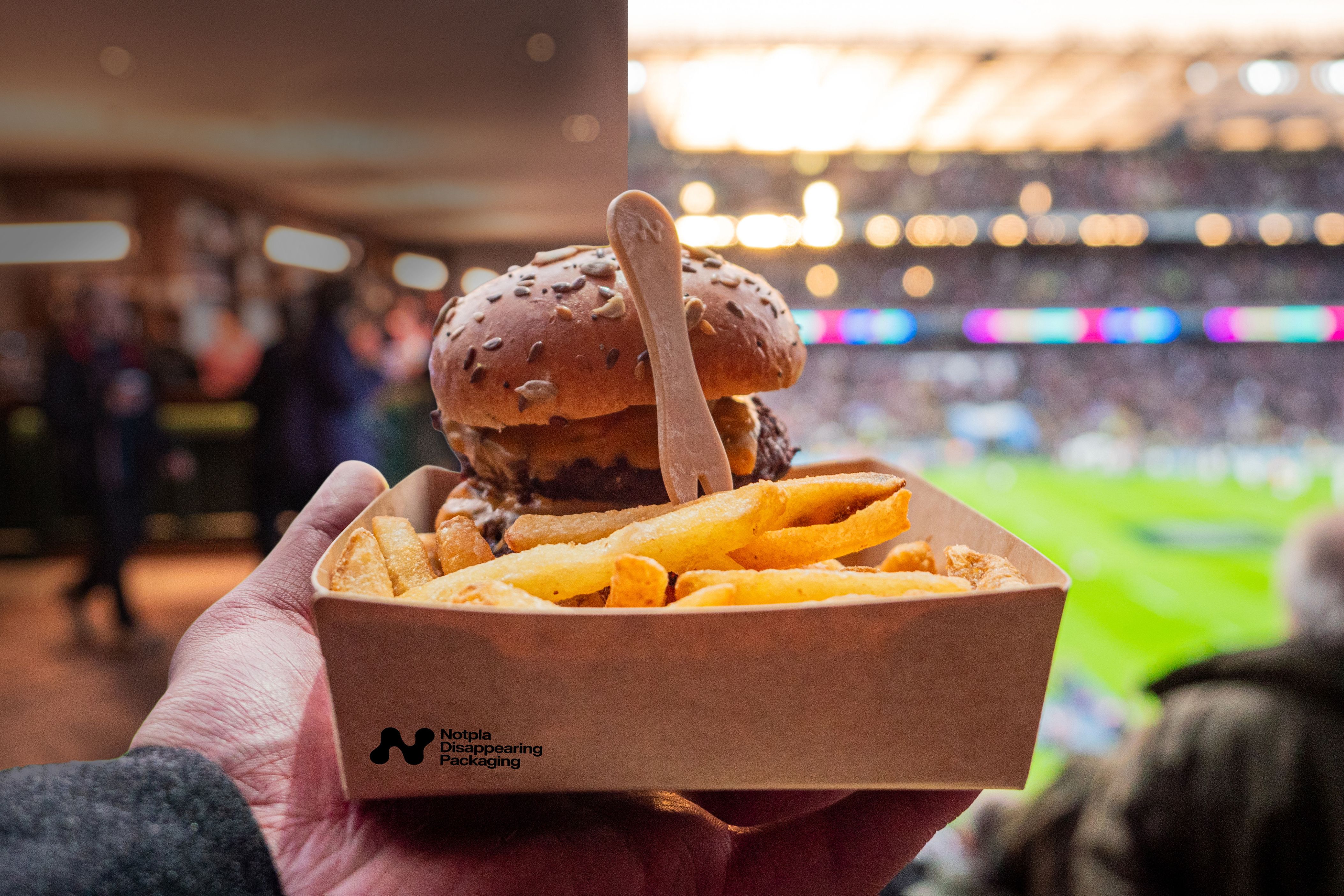
"We've worked with Notpla for a few years, gradually using it throughout the whole stadium, so we need it to be sturdy."
On busy matchdays, the stadium can welcome tens of thousands of supporters, serving thousands of meals over the course of a day.
Packaging needs to withstand hot food, resist grease and support fast-moving service.
According to Danny, that's exactly what the packaging delivers.
"Our chefs are very happy and the customers are as well."
For Levy, introducing plastic-free packaging hasn't meant changing the way kitchens operate. Instead, it's become another part of delivering a consistent customer experience.
One of the most rewarding parts of the partnership hasn't happened in the kitchen.
It's happened when customers discover what the packaging is made from, Kevin stated:
"The look on people's faces when I say this is actually seaweed-lined still makes me happy."
Those moments have helped turn everyday food packaging into something people remember and talk about.
For Levy's partners, they're also a visible demonstration that meaningful sustainability changes are possible without compromising the customer experience.
In 2025 alone, Levy's switch to Notpla helped remove 2.5 tonnes of plastic from its operations, providing another example of how incremental changes can add up across large hospitality businesses.
As Kevin puts it:
"This is an impact and a change that we're making for good, for the future."
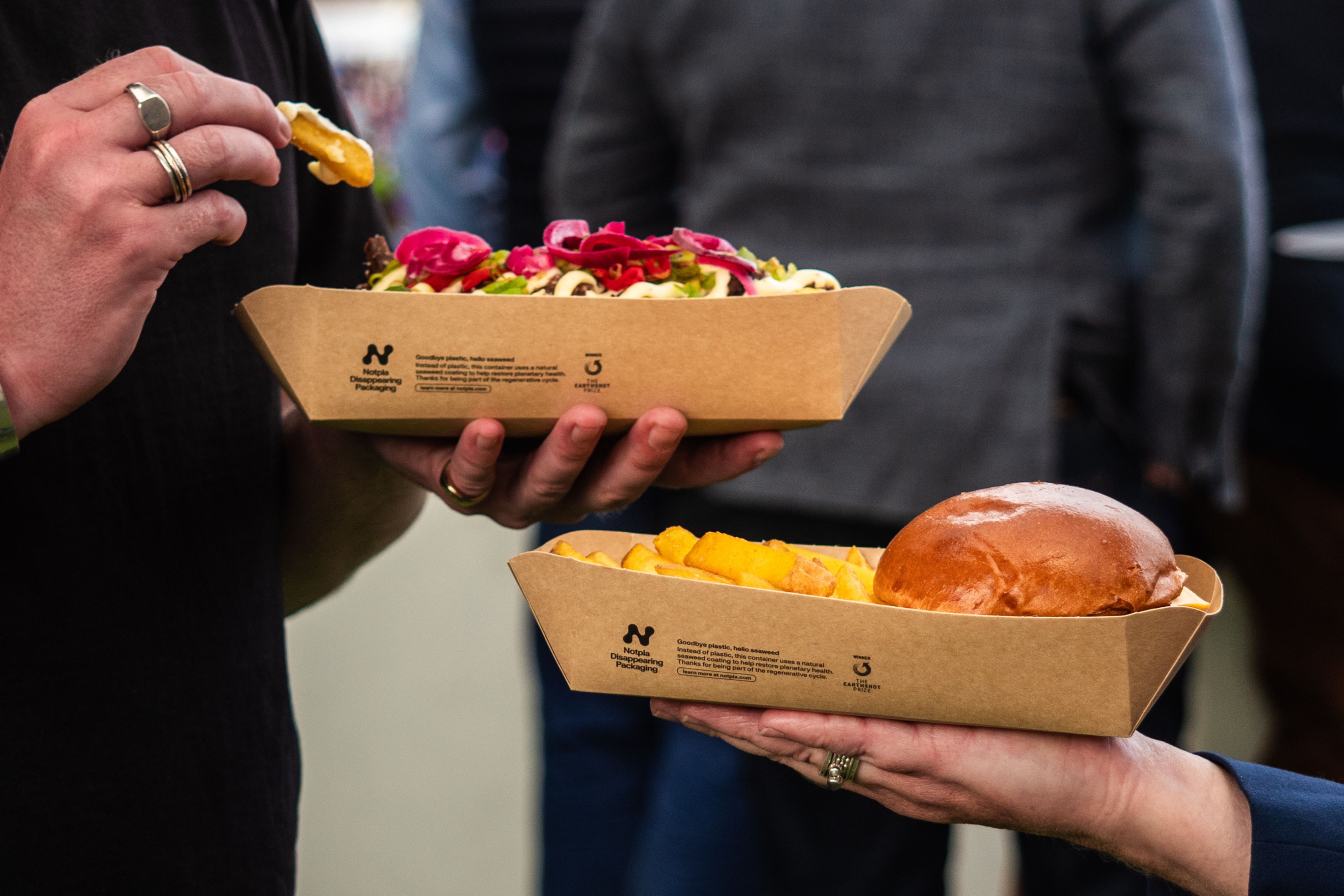
For organisations considering more sustainable food packaging, Kevin's advice is simple: start by understanding the products that move through your business every day.
"You have to do what's right for your business. If you're purpose-driven in any way, you have to get interested in the items and products in your business that make a change."
He also believes businesses don't need to make the transition alone.
"The team are really engaged, really supportive to help you with the switch. Then it just becomes part of your business."
For an industry that's often been told large-scale change is too difficult, Levy's experience suggests something different.
Not that every challenge has been solved.
But that sustainable food packaging can become part of everyday hospitality operations when performance, practicality and partnership are considered together.
Can sustainable food packaging work in stadiums and large venues?
Yes. Levy uses Notpla packaging across venues including Wimbledon, Allianz Stadium, The Kia Oval and ExCeL London, demonstrating that plastic-free food packaging can perform in high-volume hospitality environments.
Why did Levy choose Notpla?
According to Kevin Watson, Levy evaluated logistics, pricing, route to market and lifecycle assessment alongside product performance before deciding to introduce Notpla packaging.
How does Notpla packaging perform during busy service?
Senior Head Chef Danny Lucas says the packaging is sturdy, grease resistant and capable of meeting the demands of busy matchdays, adding that it "stands up to traditional packaging."
What is Notpla food packaging made from?
Notpla's food packaging replaces conventional plastic linings with a seaweed-based coating, helping foodservice operators reduce their reliance on single-use plastic while maintaining performance.
What can other hospitality operators learn from Levy?
Levy's experience shows that introducing more sustainable packaging doesn't have to mean redesigning existing operations. Success comes from finding solutions that work operationally, commercially and environmentally.
.jpg) The end of plastic versus paper: Why natural materials belong in modern manufacturing
The end of plastic versus paper: Why natural materials belong in modern manufacturing Why premium ice cream brands are switching to plastic-free spoons: Lessons from Ice Cream Union
 The Perfect Pair: Why premium ice cream brands are rethinking their packaging