
From extraordinary moments at sea to unexpected discoveries, we brought the eXXpedition crew together at Notpla HQ to explore ocean plastic pollution, the power of different perspectives and how shared experiences can inspire change.
Imagine sailing through the South Pacific at night. The horizon has disappeared into darkness. Stars begin to fill the sky overhead, while bioluminescent algae illuminate the water beneath the boat.
For Karlijn Sibbel, Notpla's Chief Innovation Officer, it was one of the moments that stayed with her most from eXXpedition's South Pacific missions.
But the journey was about much more than the places the crew visited.
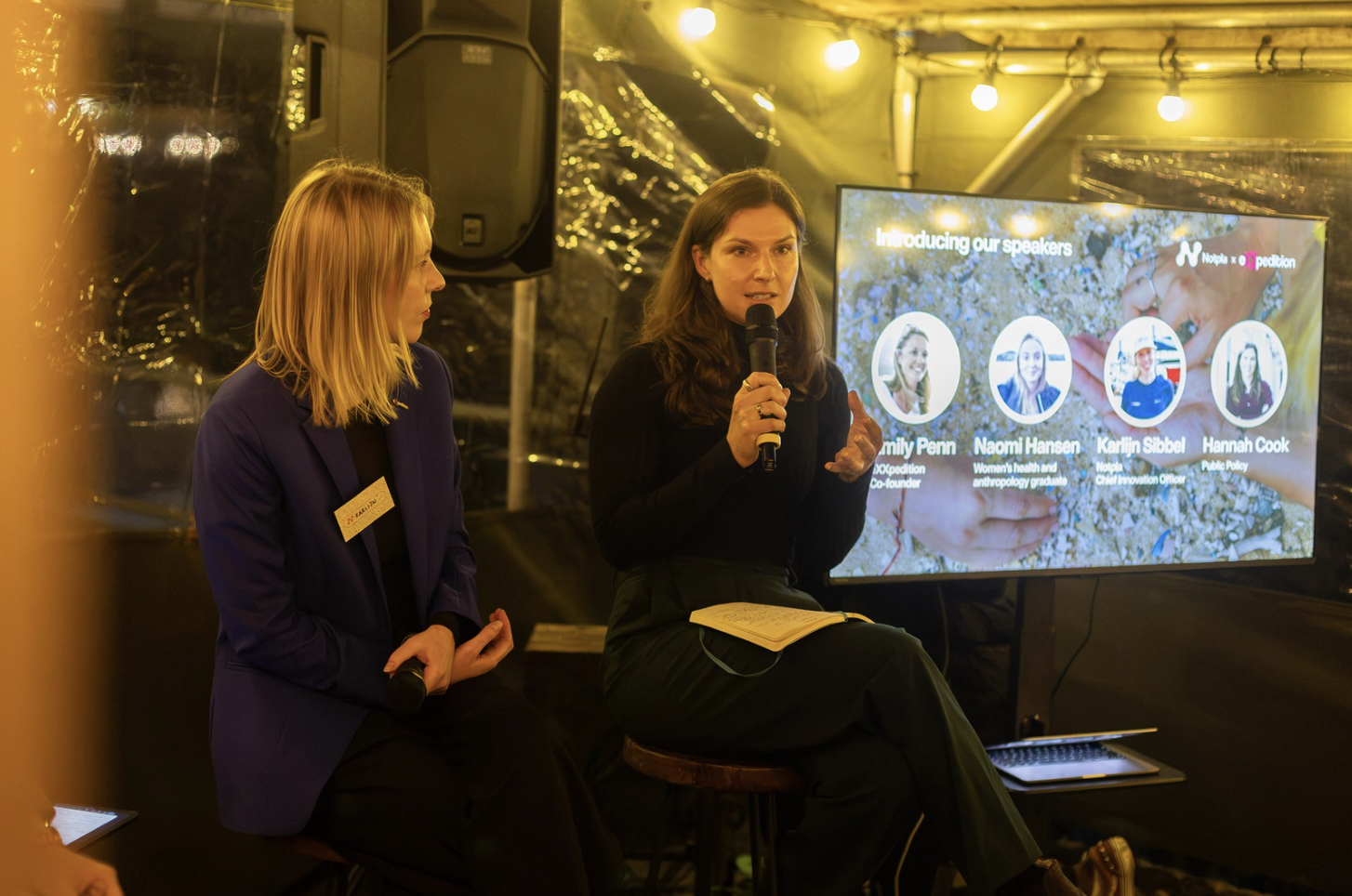
On 12 October 2026, we welcomed eXXpedition to Notpla HQ for The Power of the Journey, an evening exploring the experiences, discoveries and new perspectives that emerge when women from different backgrounds come together to investigate ocean pollution.
Hosted by eXXpedition Co-Founder Emily Penn, the conversation brought together Naomi Hansen (women's health and anthropology), Karlijn Sibbel (Chief Innovation Officer at Notpla) and Hannah Cook (public policy).
Together, they reflected on life at sea, what they discovered about plastic pollution and how the experience continues to influence their work back on land.

eXXpedition brings together women from different disciplines to investigate ocean plastic pollution through scientific research, storytelling and shared experiences.
For the South Pacific crew, that meant navigating unpredictable weather, collecting scientific samples and learning to live alongside people they had only just met.
Karlijn recalled how quickly the group became close.
"I felt at home so quickly."
Despite the crowded conditions, the shared experience created connections that extended far beyond their different professional backgrounds.
Hannah's experience was rather different. Her leg of the expedition involved a demanding 1,500-nautical-mile crossing from New Zealand to Tonga, spending 15 days at sea and working in shifts to keep the boat moving.
For Naomi, even previous sailing experience couldn't prepare her for the conditions of the South Pacific.
"This type of sailing was completely out of my comfort zone."
Life onboard required everyone to contribute, adapt and rely on one another. It challenged expectations, encouraged collaboration and gave the crew an opportunity to step outside their everyday environments.
And as the conversation revealed, those experiences were just as important as the scientific discoveries that followed.
Alongside the extraordinary natural surroundings came some unexpected discoveries.
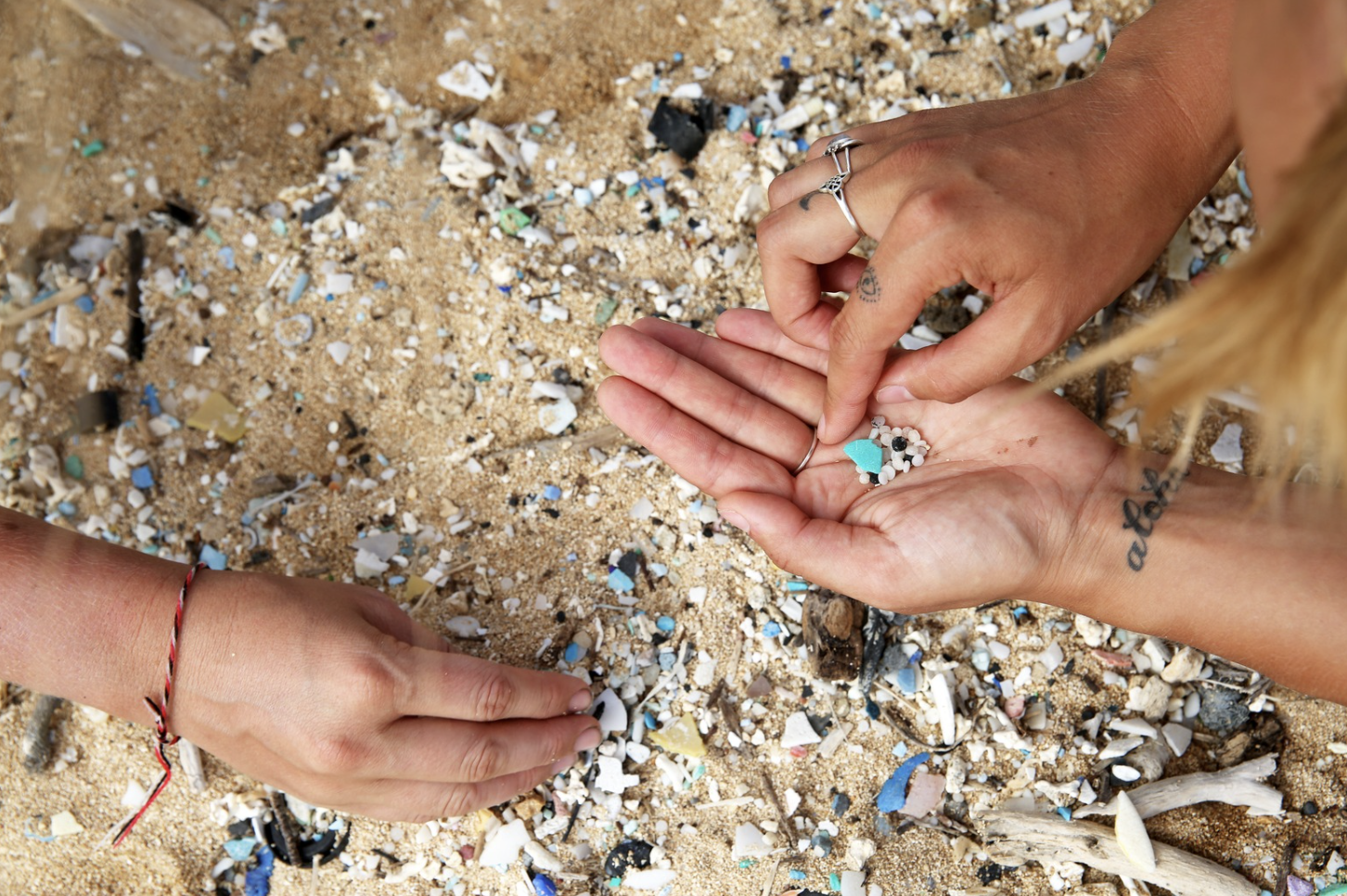
Naomi recalled visiting a remote, uninhabited island and finding familiar objects washed ashore, including plastic bottles, caps and wrappers.
Hannah described discovering a piece of plastic caught against coral at Minerva Reef, a striking reminder of how connected even the most remote environments are to human activity.
Meanwhile, Karlijn reflected on examining samples under a microscope and struggling to distinguish tiny plastic fragments from plankton and other organic matter.
Working with researchers at the University of Georgia, the crew collected samples at sea and on land to contribute to ongoing research into plastic pollution across the South Pacific.
But the experience also highlighted how much there is still to understand about where plastic pollution comes from, how it travels and what happens once it enters the environment.
As Emily explained:
"There's no single source of plastic pollution, which also means that there's no single solution."
The discoveries raised questions that extended far beyond the ocean itself.
If plastic pollution can reach some of the world's most remote environments, how do we begin to address the systems and decisions responsible for putting it there?
And what can different disciplines learn from one another to help prevent it?
One of the most interesting parts of the evening was hearing how the crew's different backgrounds shaped what they took away from the expedition.
For Naomi, her background in women's health brought a different perspective to the conversation.
She explored the relationship between environmental exposure, chemicals associated with plastics and the research gaps that remain around women's health.
These conversations introduced Karlijn to questions she hadn't previously considered in the same way, particularly around the disproportionate impacts of environmental challenges on women and the gaps in scientific understanding.
"That was something I hadn't been so aware about before."
It demonstrated why eXXpedition brings together people with such different expertise. The same experience can reveal entirely different challenges depending on who's looking at it.
For Karlijn, the expedition also reinforced her approach to material innovation.
"Materials are part of a full system. It's where it's coming from. It's where it's going to end up."
At Notpla, this thinking informs the development of seaweed-based packaging, considering not just how materials perform during use, but where they come from and what happens afterwards.
For Hannah, the experience highlighted the importance of connecting the work happening across different industries, organisations and disciplines.
"Everybody holds a piece of the puzzle."
She described this approach as a 'team of teams', where different people contribute their knowledge, recognise the barriers they face and work together towards a shared goal.
It was a theme that continued throughout the evening: understanding a complex challenge requires more than one perspective, and making progress depends on connecting them.
If the expedition revealed anything, it was that ocean plastic pollution can't be understood, or addressed, through a single perspective.
For Naomi, the journey raised new questions about environmental exposure, women's health and the research still needed to understand the potential impacts of plastics.
For Karlijn, it reinforced the importance of designing materials with their entire lifecycle in mind, from where they come from to what happens after they're used.
And for Hannah, it highlighted the role of collaboration in connecting scientific understanding with policy and meaningful change.
These different perspectives pointed towards a shared conclusion: addressing ocean pollution means looking further upstream, at the materials, systems and decisions that contribute to the problem in the first place.
This is particularly relevant when thinking about short-life materials and packaging.
At Notpla, we're exploring how naturally derived materials, including seaweed, can offer alternatives to conventional plastics in applications where materials are only needed for a short time.
But material innovation is only one part of a much wider picture.
Researchers, policymakers, businesses and individuals all have different roles to play in changing how materials are designed, used and managed.
And as the crew's experience demonstrated, bringing those perspectives together can uncover opportunities that might otherwise be missed.
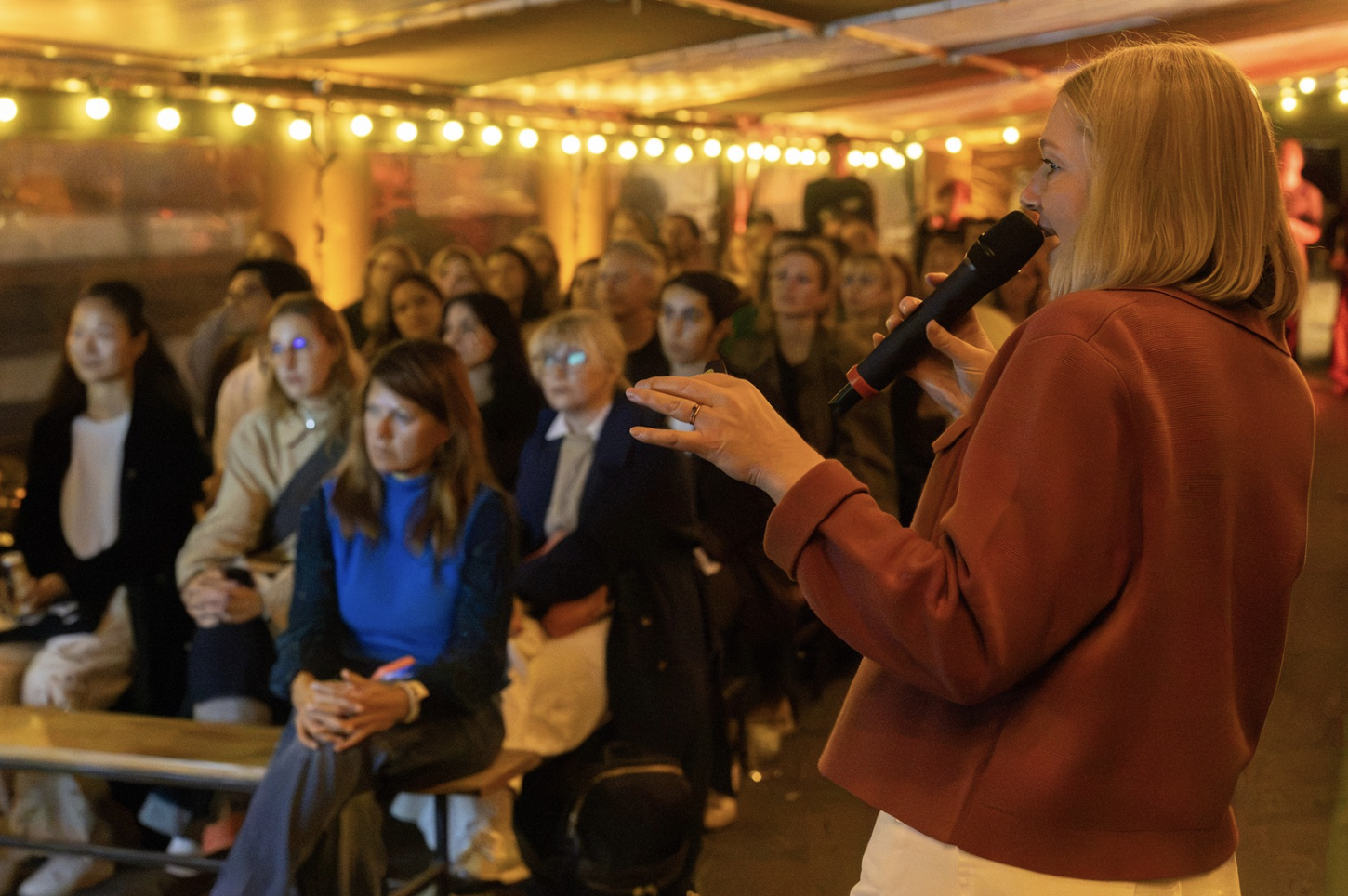
As the evening came to a close, one thing became clear: returning to land doesn't mean the journey is over.
The experiences continue to shape how the crew approach their work, the conversations they have and the questions they ask.
The evening also showed that meaningful discoveries don't always come in the form of scientific results.
Sometimes they're found in a conversation with someone who sees the world differently. In an unexpected encounter on a remote island. Or in a moment of complete darkness, surrounded by stars and an ocean full of life.
The power of the journey lies not just in what we discover, but in how those experiences change what we do next.
A huge thank you to Emily Penn, Naomi Hansen, Karlijn Sibbel, Hannah Cook and the wider eXXpedition community for sharing their stories, and to everyone who joined us at Notpla for the conversation.
eXXpedition is an organisation that brings together women from different backgrounds to investigate ocean plastic pollution through sailing expeditions, scientific research and storytelling. Its missions combine hands-on research with collaboration, helping participants better understand the challenges facing our ocean and share what they learn.
During the South Pacific missions, crew members encountered plastic pollution in remote environments, including debris washed onto uninhabited islands and plastic caught against coral. They also collected scientific samples at sea and on land, contributing to research into the presence and distribution of plastic pollution.
eXXpedition brings together women with experience across science, health, design, policy and other disciplines to encourage different ways of understanding ocean pollution. By sharing their knowledge and experiences, participants can identify connections between environmental challenges and explore opportunities for collective action.
Plastic pollution raises important questions about human exposure to microplastics and chemicals associated with plastics. Research is exploring potential health impacts, although significant gaps in scientific understanding remain. During the event, Naomi Hansen discussed these issues in relation to women's health and the importance of further research.
Tackling plastic pollution upstream means addressing the problem before waste reaches rivers and oceans. This includes reconsidering how materials are designed, manufactured, used and managed at the end of their life, rather than relying solely on collecting pollution once it has entered the environment.
Notpla develops packaging materials using seaweed as an alternative to conventional plastics in suitable applications. By considering material sourcing, performance and what happens after use, Notpla aims to help businesses rethink short-life packaging and reduce reliance on persistent materials.
 Bespoke packaging at Notpla: Meet the team behind our food packaging design process
 The end of plastic versus paper: Why natural materials belong in modern manufacturing
 Notpla Stadium Range: building sustainable packaging into the big-game experience, at scale with Levy.
