
.jpg)
This Earth Day, we’re taking a moment to look back on the past year at Notpla.
It’s been a year shaped by progress, partnerships and a growing sense of what scale really looks like. Much of this will be brought together in our upcoming Impact Report, but for now, this feels like a moment to pause and reflect on what is already changing.
From the outside, impact is often reduced to numbers. And this year, there is one that stands out.
Since founding Notpla in 2014, we’ve now replaced over 40 million single-use plastic items. It’s a significant milestone, but like most large numbers, it can be difficult to picture that scale.
In the past year alone, that means 11.6 million plastic items were replaced, 22 tonnes of plastic have been displaced, and 600 tonnes of CO₂ avoided. It’s the equivalent of around 30 items being replaced every minute, for a full year.
Each of those items is small. A takeaway box, a spoon, a coating you might not notice. Repeated thousands of times a day, across different venues and contexts, they begin to accumulate into something more meaningful.

Hoa Doan, our Head of Impact, reflects on what the past year has meant.
“What stands out this year is consistency. Years of work, across science, partnerships and systems, are now translating into real scale.”
That idea runs through the work behind everything we do. None of this happens overnight. It comes from years of material development, testing and iteration, and from building the relationships that allow these materials to move beyond the lab.
One of the clearest shifts this year is where we are seeing Notpla materials appear. Not in prototypes or one-off trials, but in everyday environments.
That includes 450,000 seaweed-based items rolled-out across Imperial College London, a full rethink of food packaging at the iconic IKEA Oxford Street, and more than 4 million plastic items replaced across Levy venues and stadiums in Europe.
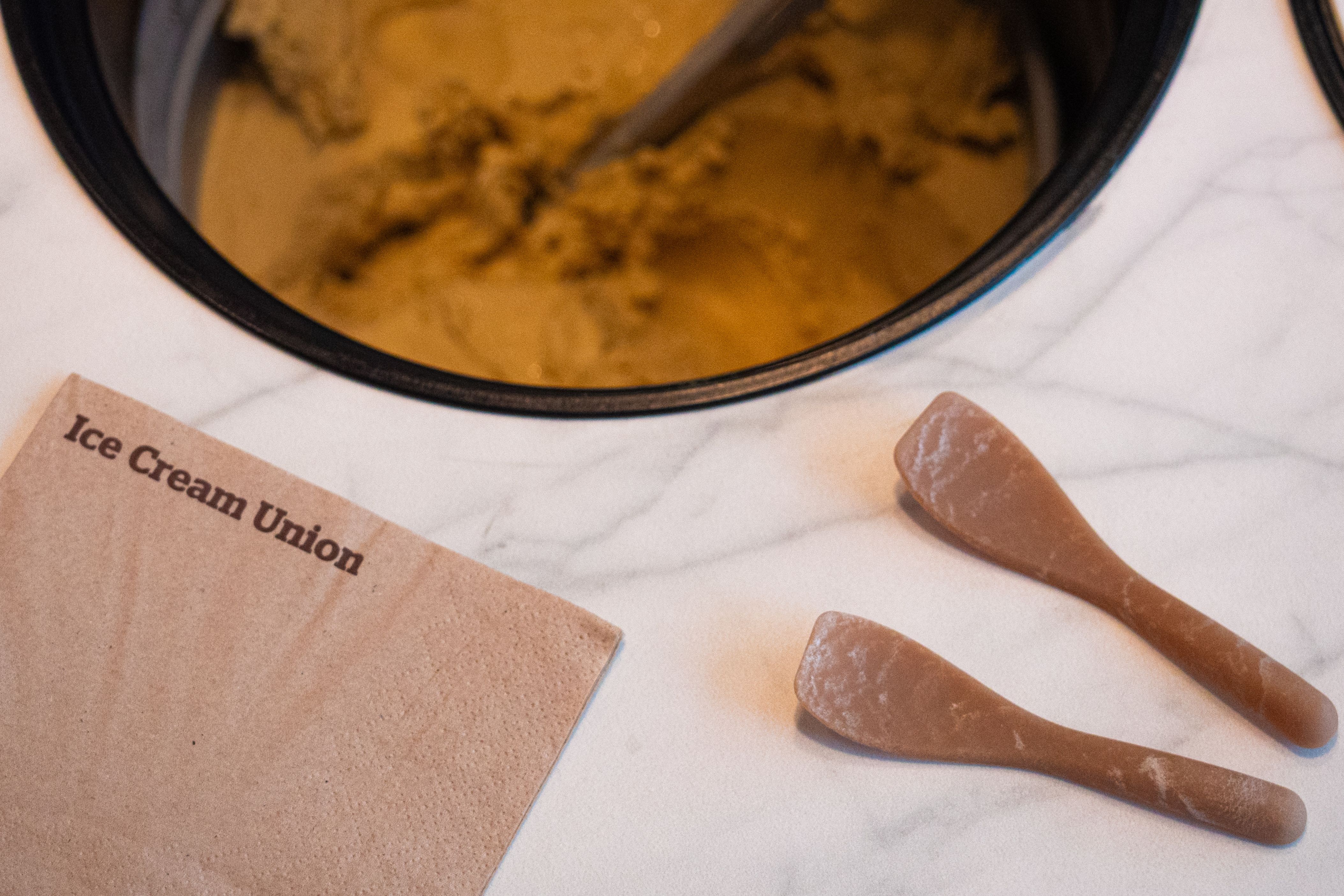
Alongside these are smaller, more visible moments. A next-generation seaweed-based spoon at Wimbledon. An espresso cup trialled in Rio at The Earthshot Prize ceremony.
Individually, these are simple interventions. Together, they begin to show that natural materials can perform under real conditions, at the pace and scale that food systems demand.

It’s easy to focus on the material itself. But real impact doesn’t come from products alone.
It’s shaped by everything around them. Partnerships with seaweed suppliers, working to build resilient and responsible supply chains. Customers that are willing to rethink how packaging fits into their operations. And a multidisciplinary team combining science, engineering and design to turn natural polymers into materials that perform at scale.
As Hoa reflects, it is not just about the numbers. It is about the systems behind them.
At the heart of this work is a simple idea. Plastic was designed to last forever. Packaging was not.
That mismatch has created materials that outlive their purpose by decades, often centuries. What we’re seeing now is a shift away from that.
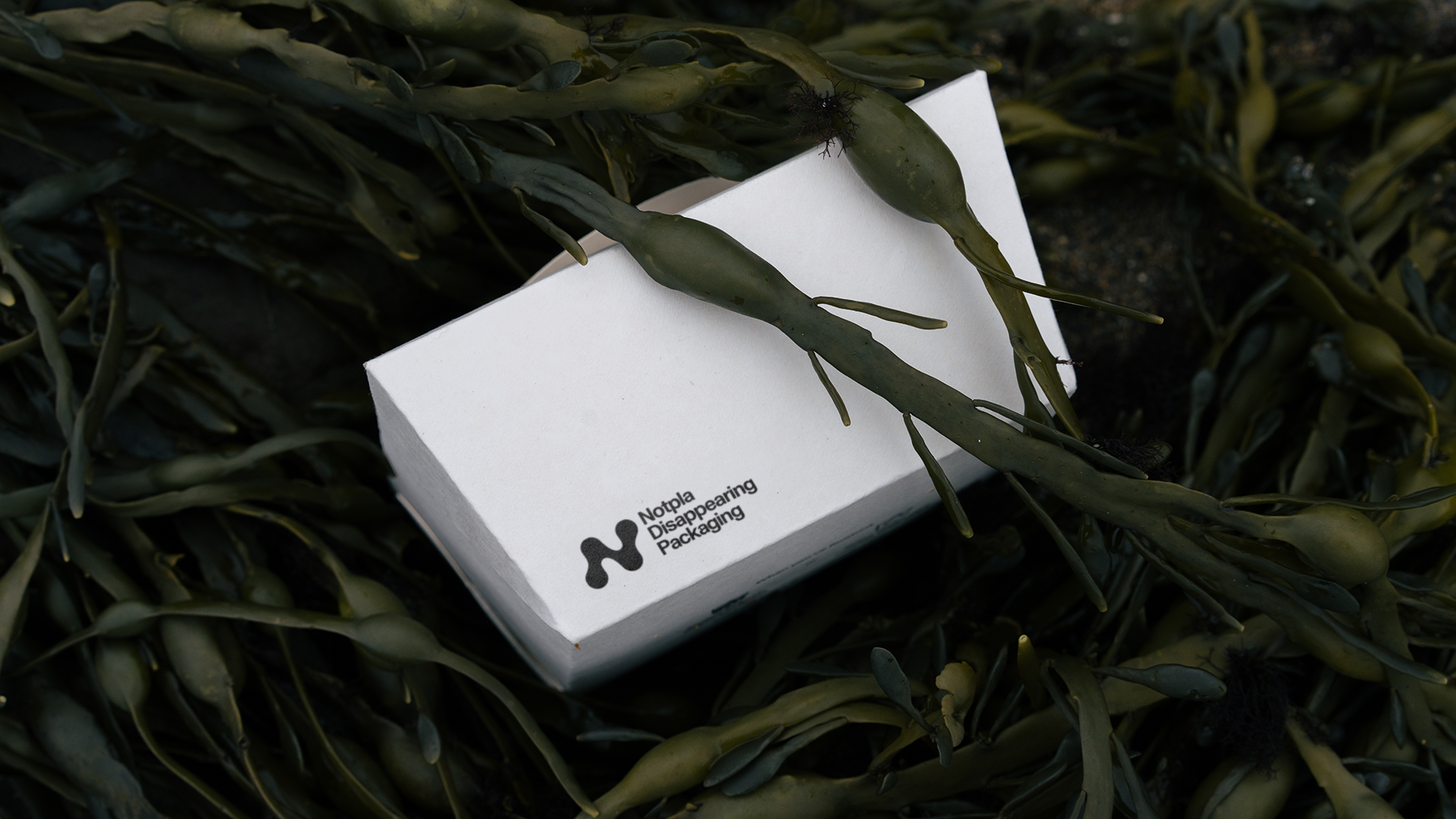
Towards materials designed to do their job, and no more. To perform during use, and return safely to nature afterwards. Seaweed sits at the centre of that shift. Not just as a material, but as a way of rethinking how resources are sourced, used and returned.
If there is one thread running through this year, it’s movement. From material science to industrial production. From pilot projects to long-term rollouts. From individual products to wider change.
This shift is visible in the numbers, but it is also visible in how the work itself is evolving. Less about proving what is possible, and more about demonstrating how it works in practice, repeatedly and reliably.
One phrase we’ve kept coming back to is simple.
“This is what scale actually looks like.”
Not a single breakthrough moment, but many small decisions repeated across partners, products and places. It’s not perfect, and it’s not finished. But it’s real, and it’s already happening.
What comes next is already beginning to take shape.
From developing fully natural coffee cups to advancing seaweed coatings and expanding global supply chains, the focus remains consistent. Turning natural materials into solutions that can replace plastic in everyday use.
And doing so in a way that leaves no lasting trace behind.
We’ll be sharing our full 2025 Impact Report later this week, bringing together the data, case studies and thinking behind this year in more detail.
.jpg) The end of plastic versus paper: Why natural materials belong in modern manufacturing
The end of plastic versus paper: Why natural materials belong in modern manufacturing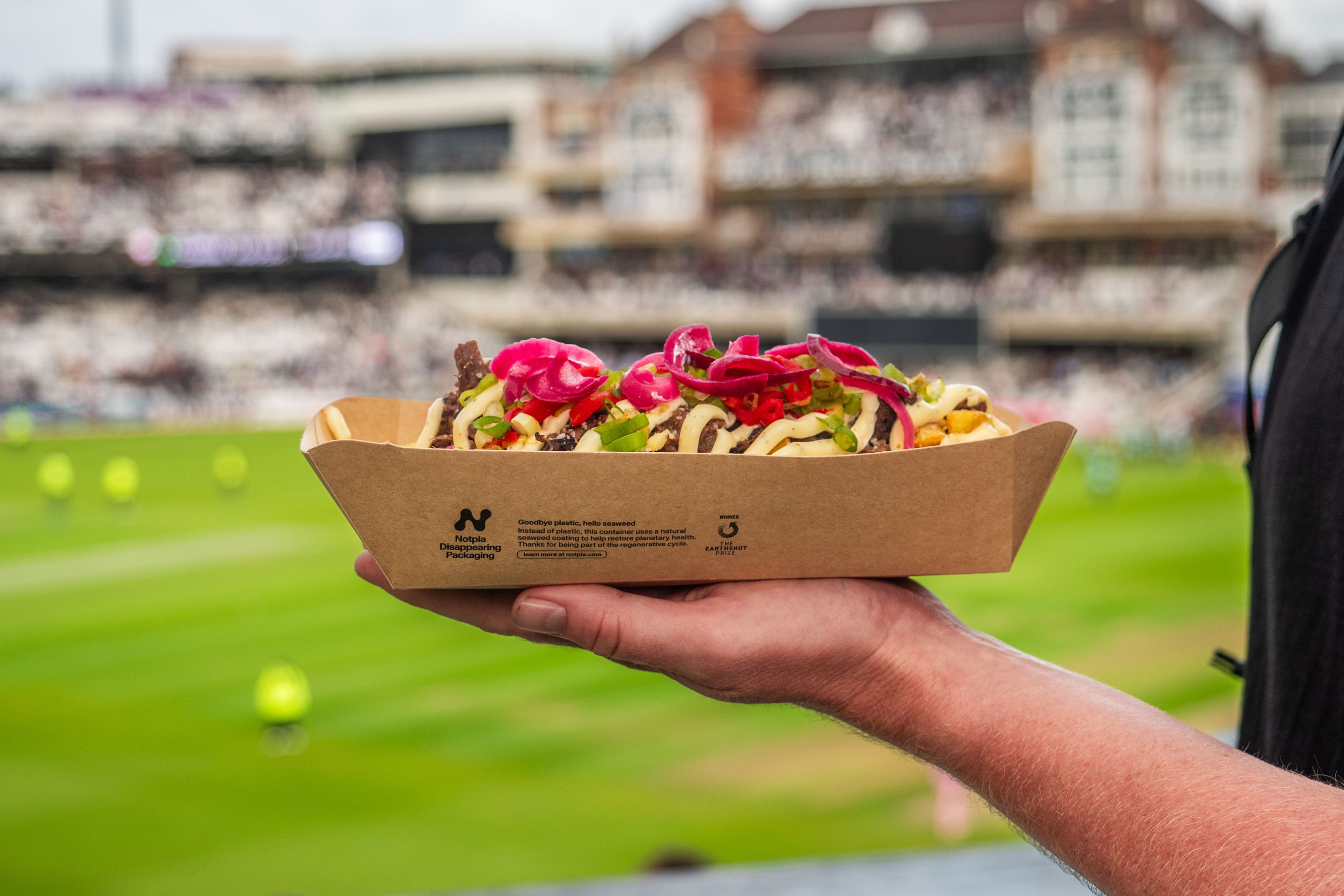 Notpla Stadium Range: building sustainable packaging into the big-game experience, at scale with Levy.
 Why premium ice cream brands are switching to plastic-free spoons: Lessons from Ice Cream Union